Burst pipe or supply line
Pressurized lines can release hundreds of gallons an hour into walls and flooring.
24/7 Emergency Response — Crews Dispatched in 60 Minutes
(949) 555-0142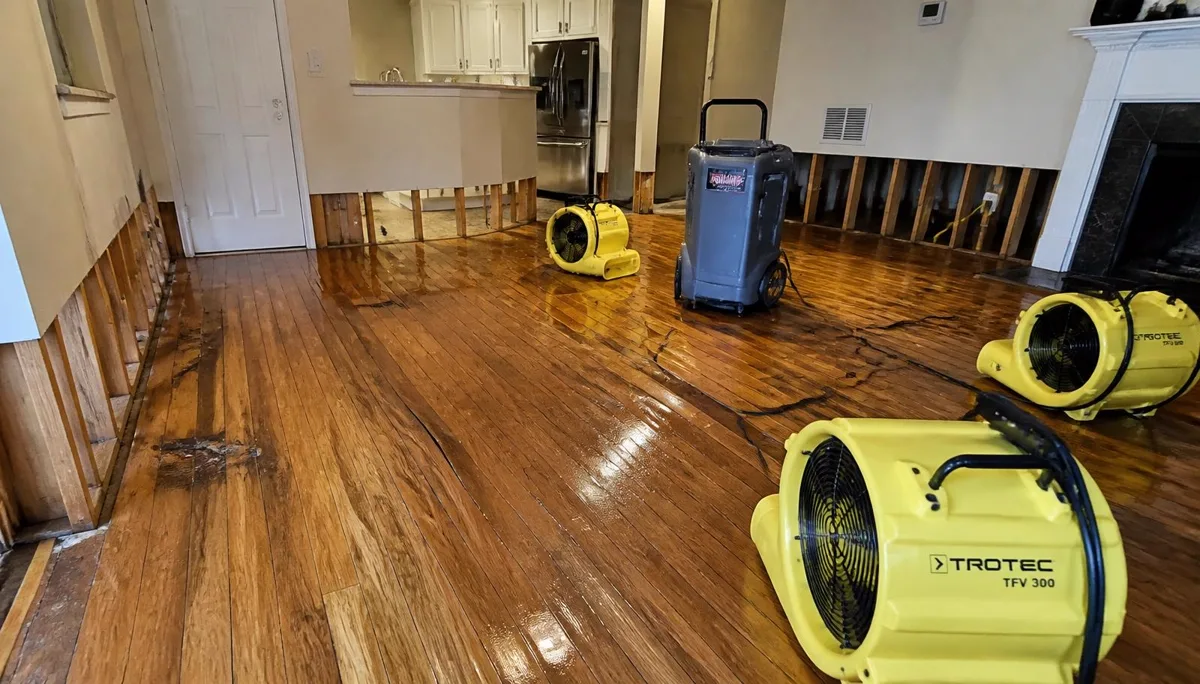
Serving all of Orange County
Orange County Rapid Restoration is an IICRC S500 certified water damage restoration firm with 22 years of work across Orange County. We handle Category 3 and sewage losses, structural drying and mold remediation, fire and smoke damage, and the insurance documentation behind all of it — with crews staged in Irvine, Huntington Beach and Mission Viejo so any address is reached inside 60 minutes.
Pick the closest match. Every situation below is handled by our crews tonight.
Pressurized lines can release hundreds of gallons an hour into walls and flooring.
Warm spots, high water bills and buckling floors usually mean a leak under the slab.
Tank ruptures flood garages and adjacent rooms, often soaking shared drywall.
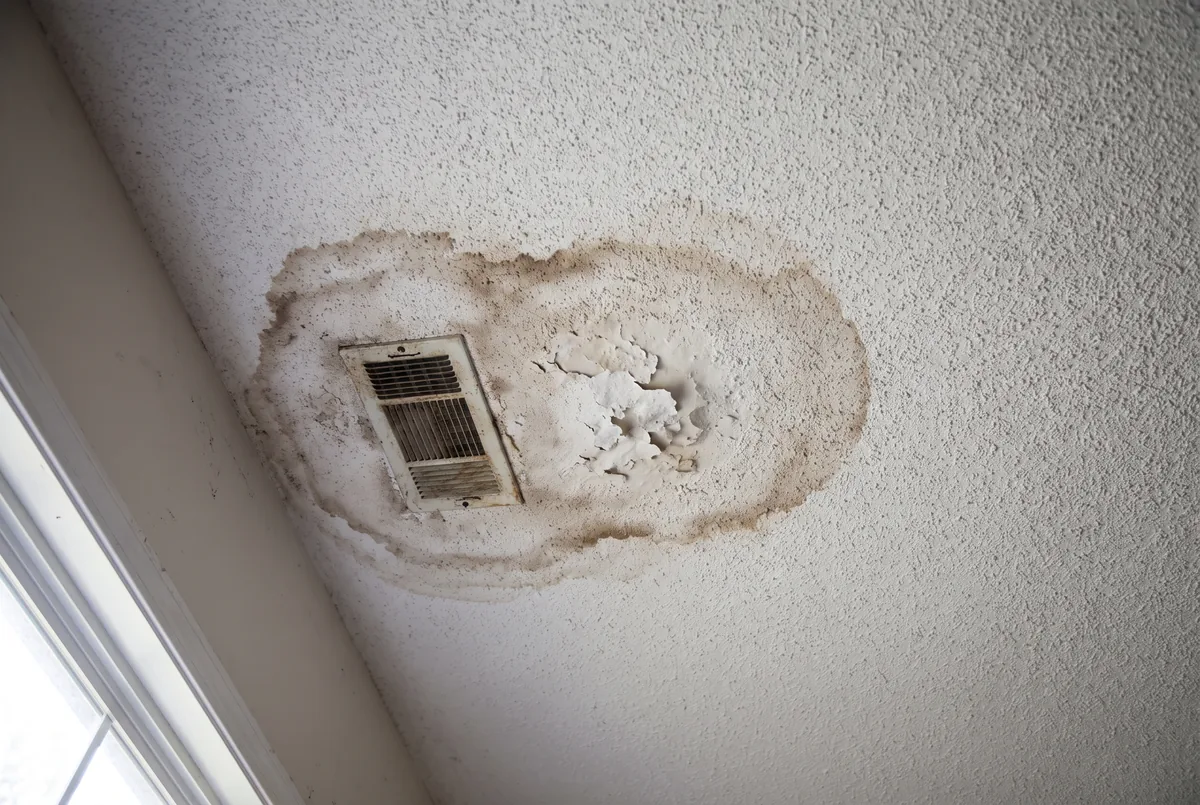
Condensate lines clog and drip into ceilings for weeks before the stain appears.
Dishwashers, washing machines and supply valves fail without warning.
Category 3 water requires containment, removal of porous materials and sanitizing.
Insulation holds moisture long after the rain stops and hides active growth.
Visible growth after a water event needs containment before any repair work.
Claims are won or lost on documentation. From the first hour we photograph the source, log the affected materials and record the water category, so your adjuster sees a sudden, accidental loss rather than a maintenance issue.
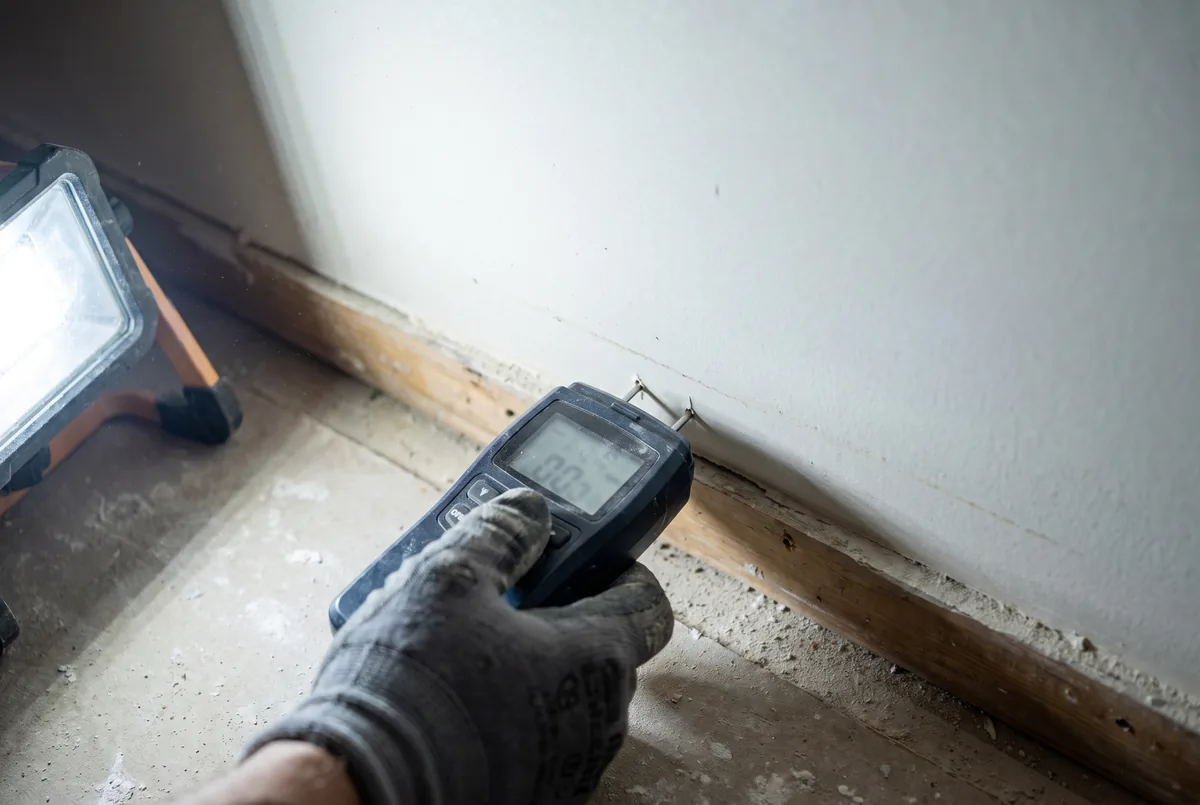
We take moisture readings in every wet material — subfloor, framing, insulation and drywall cavities — and repeat them daily until each one reaches documented dry standard. Those logs go straight into the claim file.
We bill your carrier directly using industry-standard estimating software, so you pay your deductible and nothing more on covered work. If hidden damage appears during demolition, we file the supplement for you.
24/7 dispatch, shutoff guidance and crew assignment.
Meters and thermal imaging map every wet material.
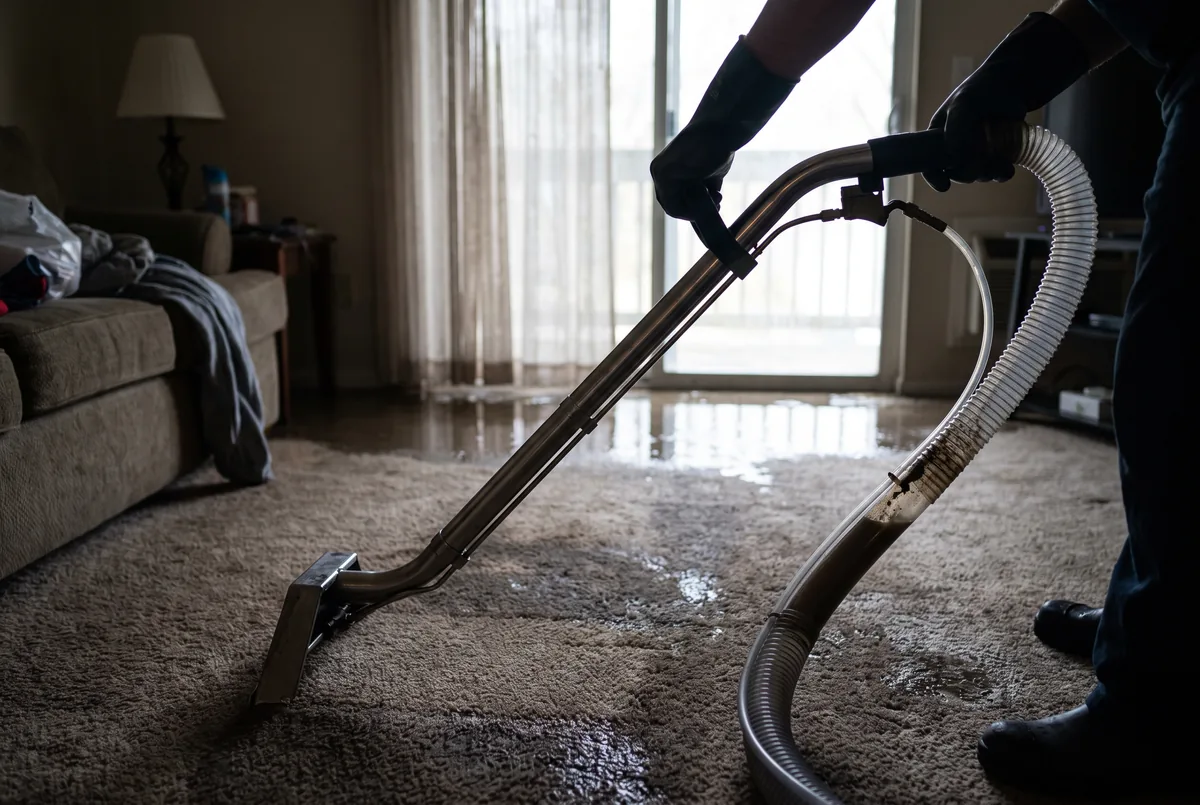
Truck-mount and portable extraction of standing water.
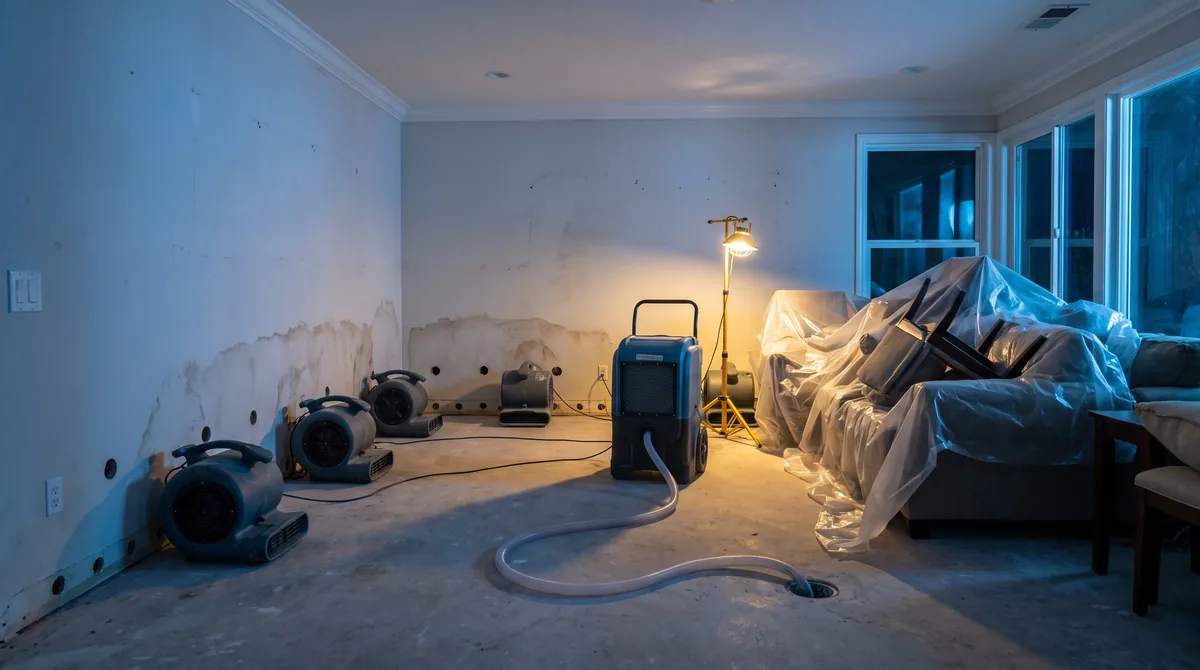
Air movers, dehumidifiers and daily documented readings.
Dry standard confirmed, then rebuild and finish work.
Equipment, readings and containment, in the order a job runs.
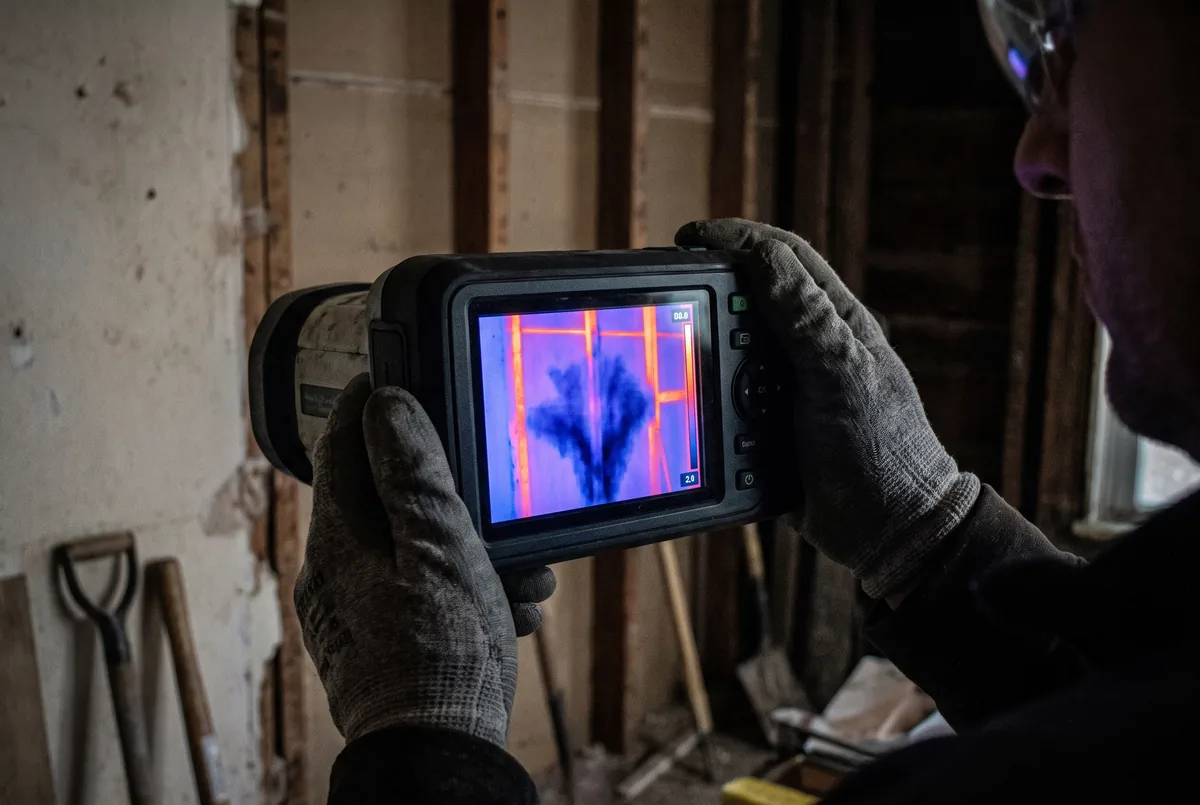
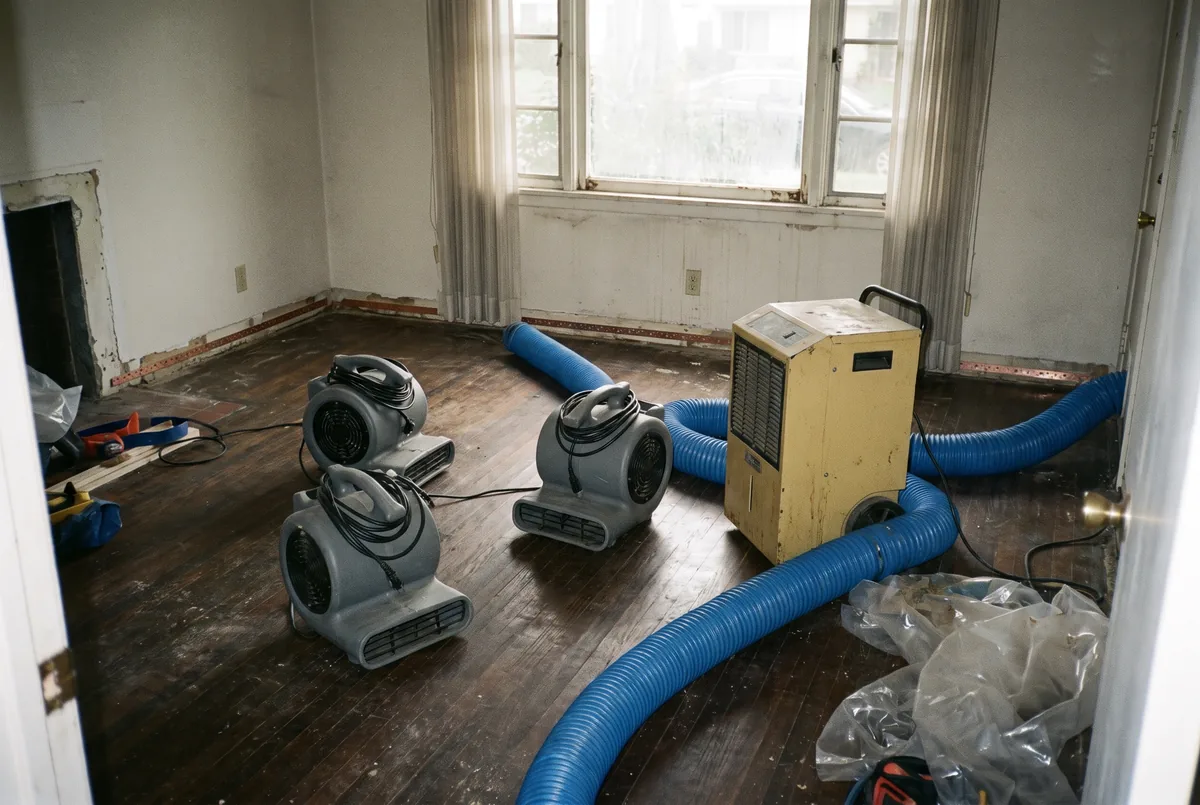
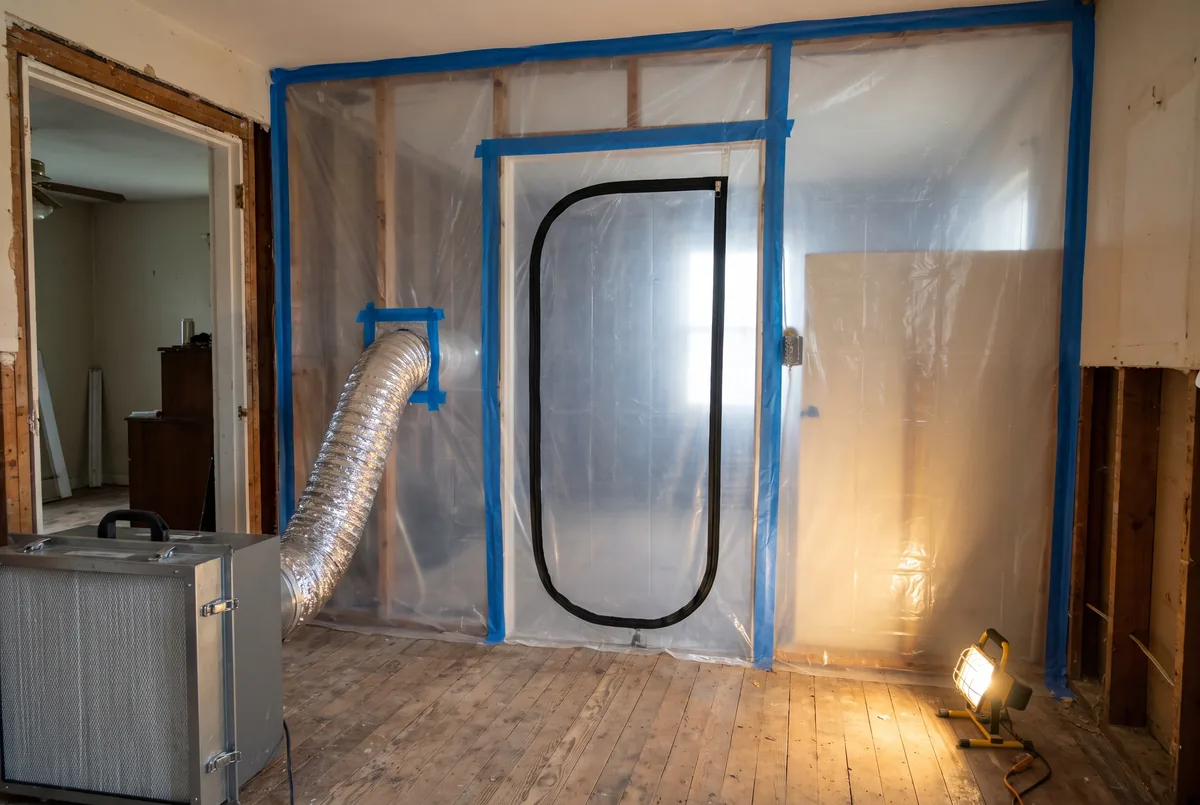
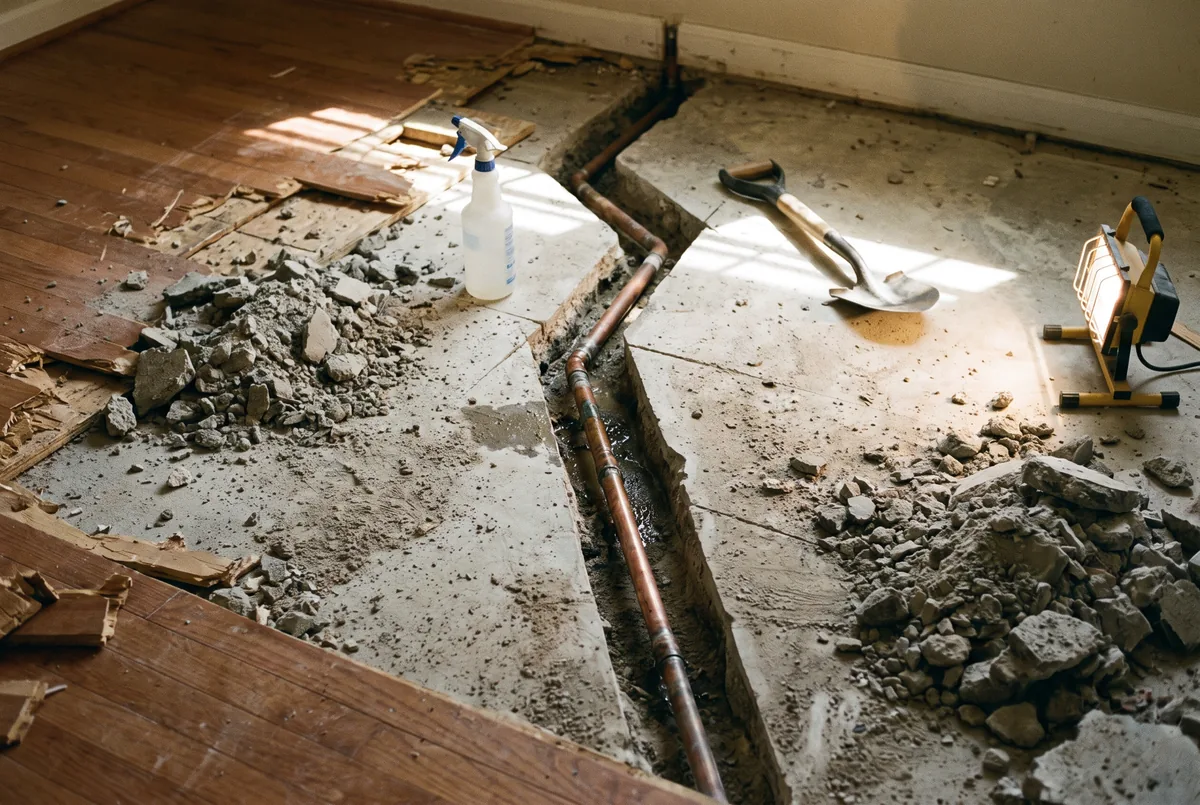
Three losses that are typical of what this county produces: a supply line behind a wall, a condensate line above a ceiling and an appliance valve under a kitchen floor.
 BeforeAfter
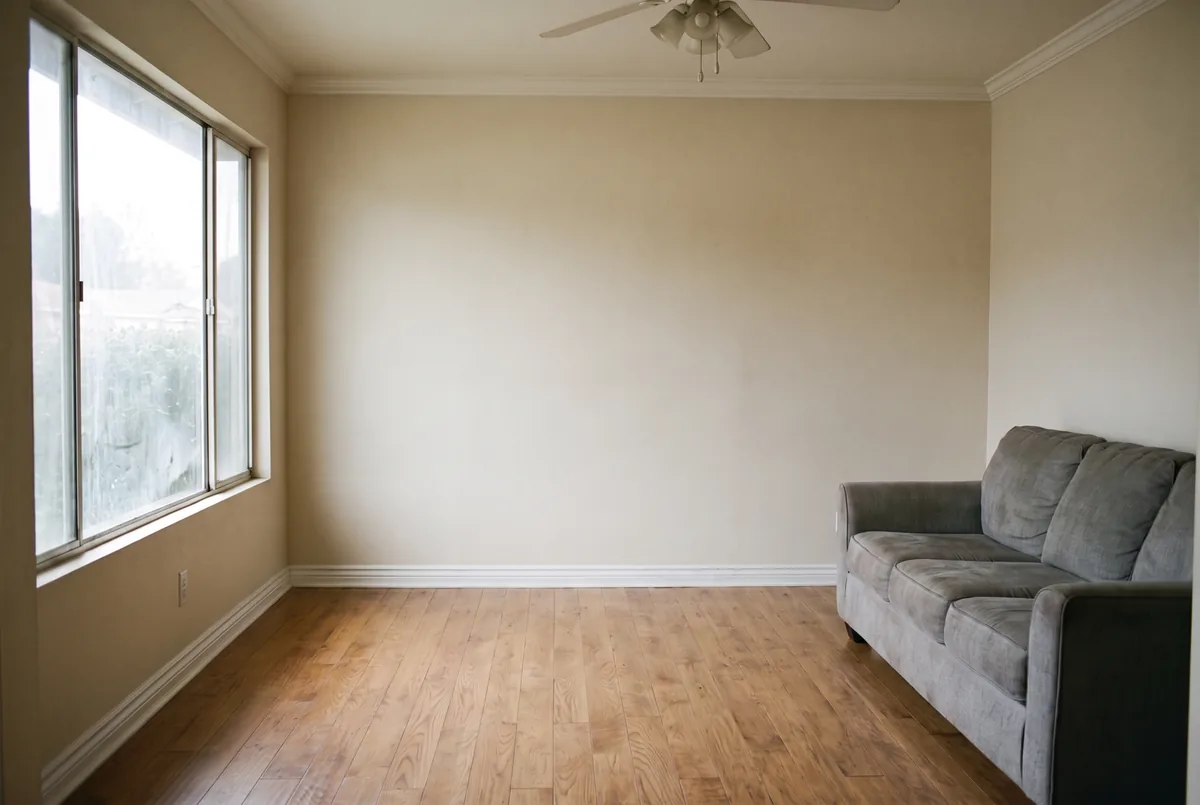
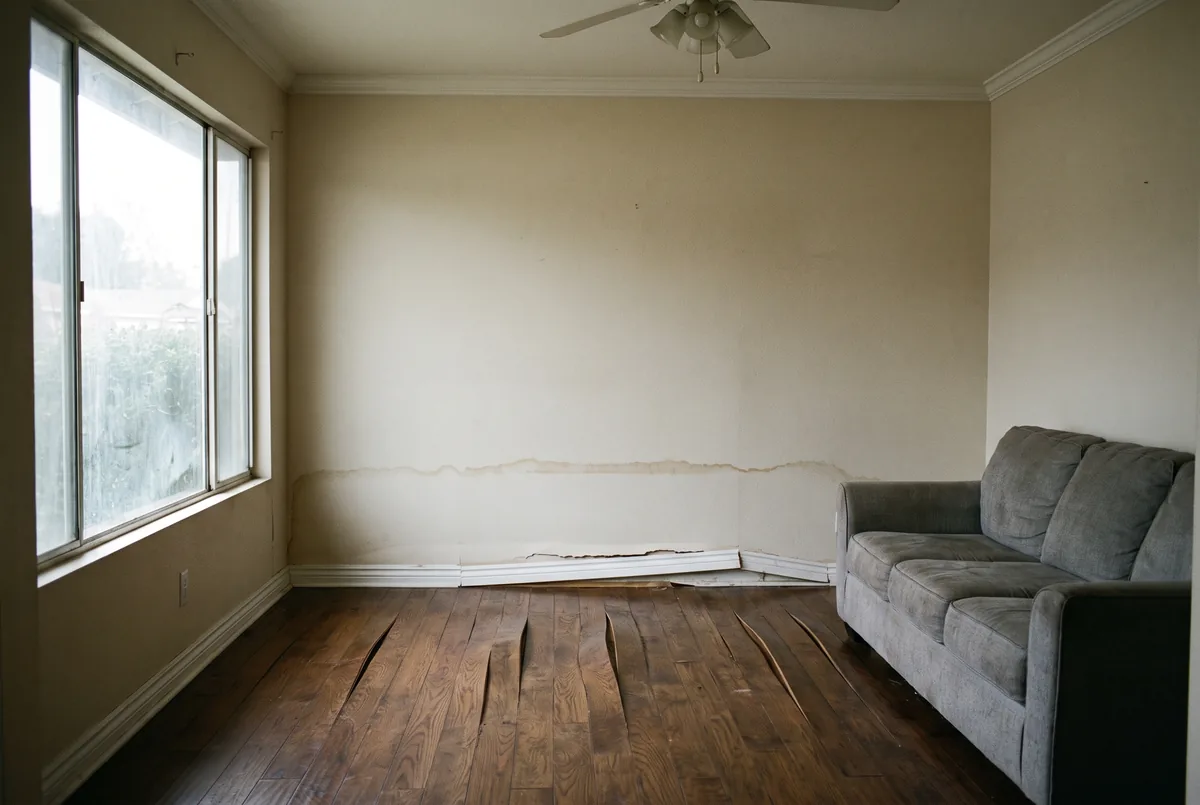
Burst copper supply line behind the wall
The line failed behind the baseboard and ran for most of a working day. Water tracked under the oak flooring across the length of the room and wicked about 18 inches up the drywall.
 BeforeAfter
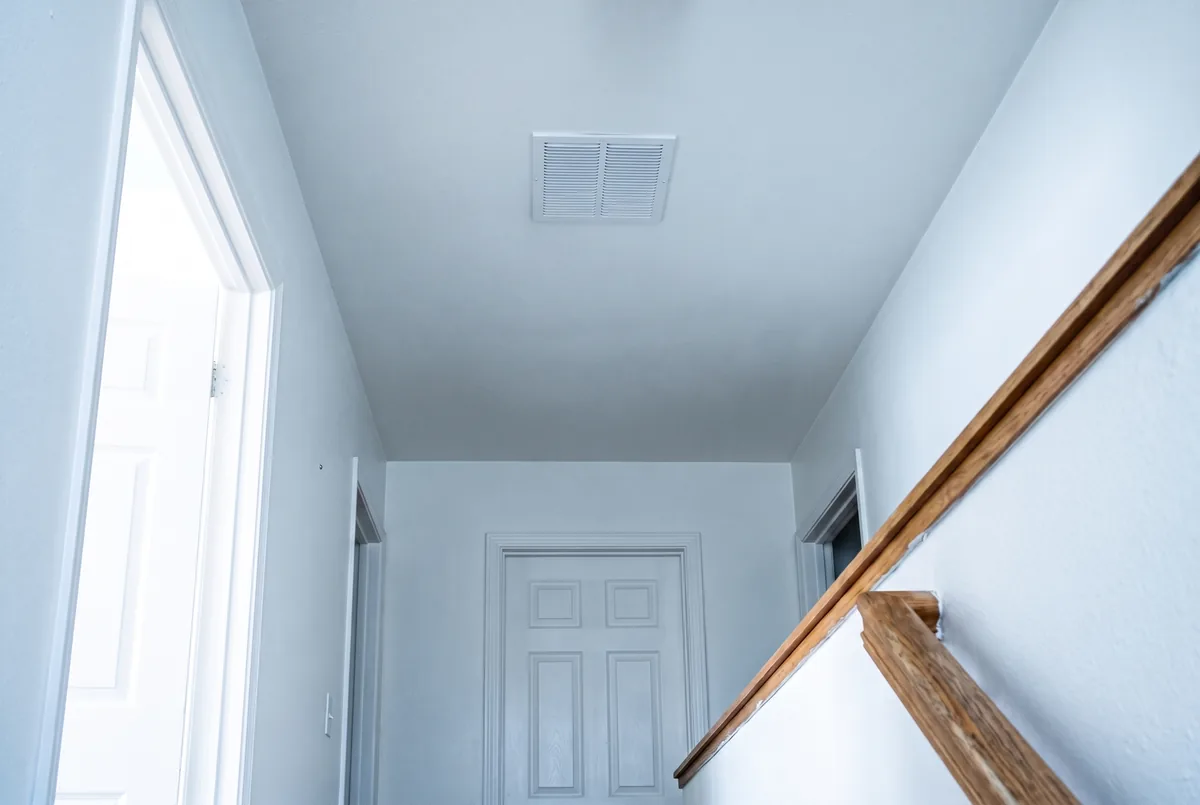
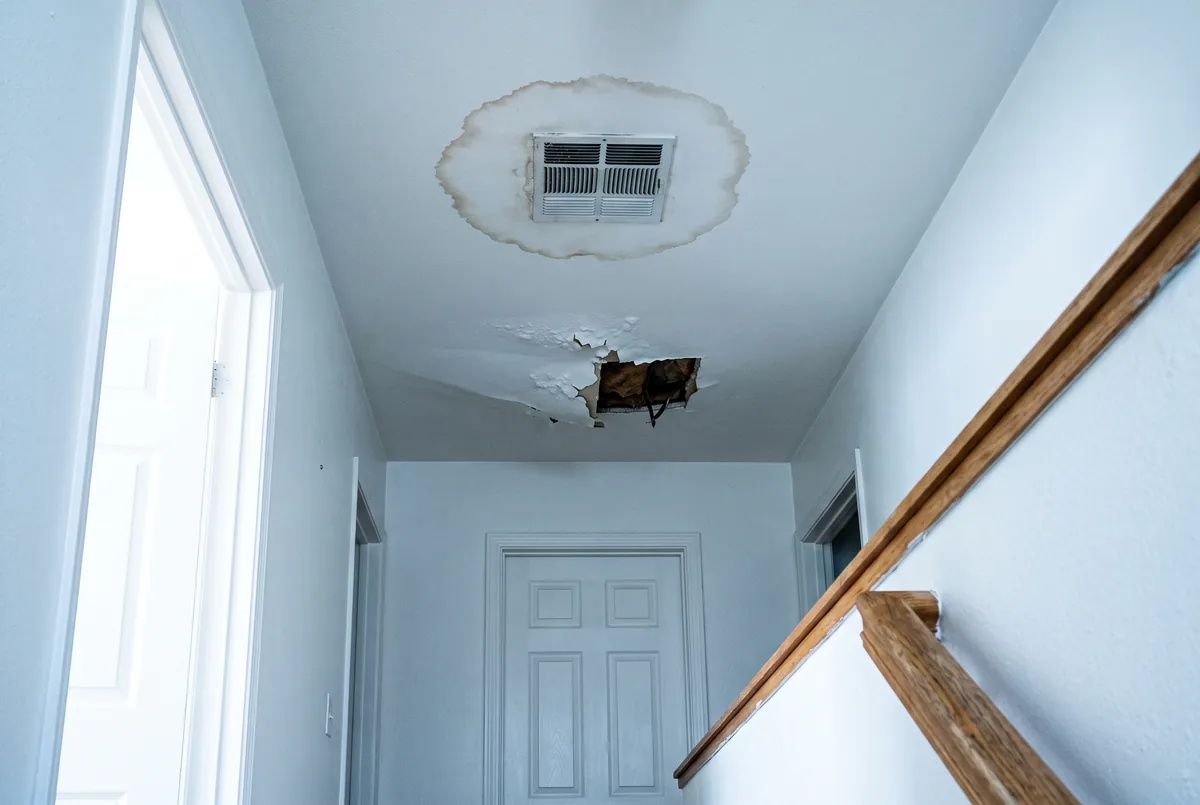
Blocked AC condensate line above the hallway
The condensate line had been dripping into the ceiling for several weeks before the stain appeared. Insulation above the drywall was saturated and the board had begun to sag.
 BeforeAfter
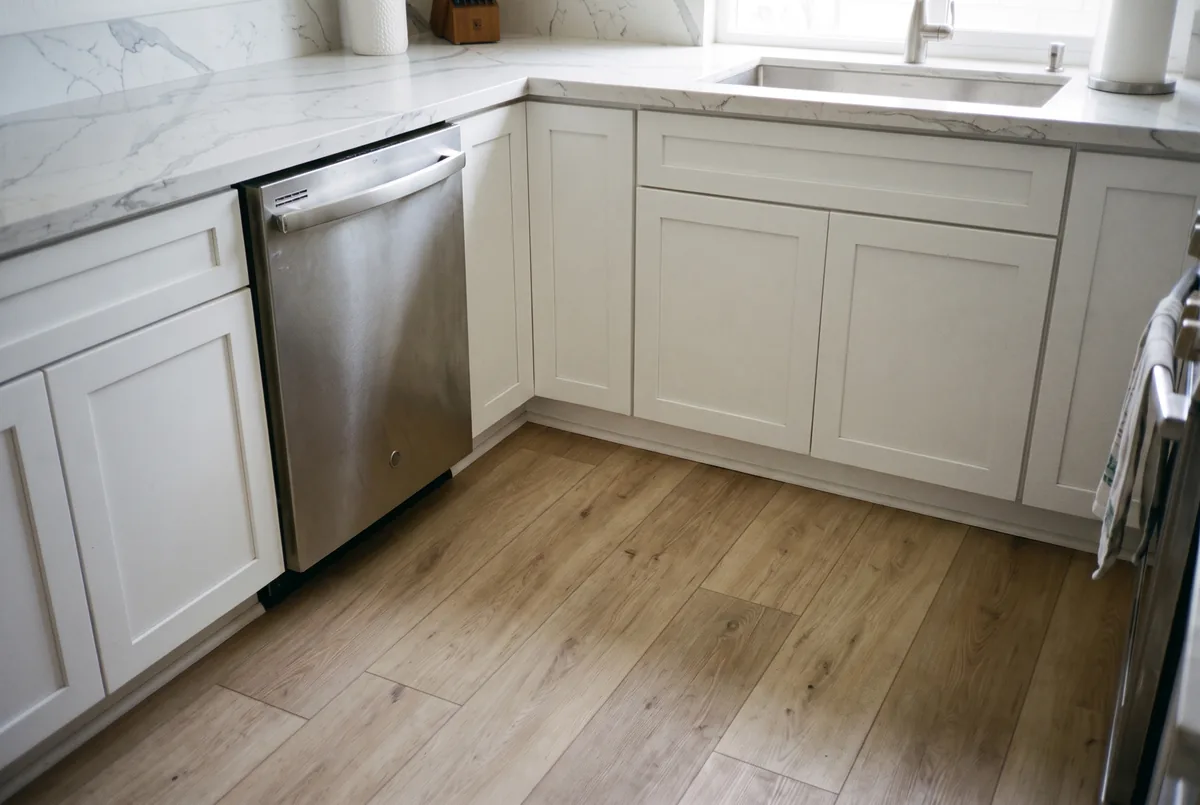
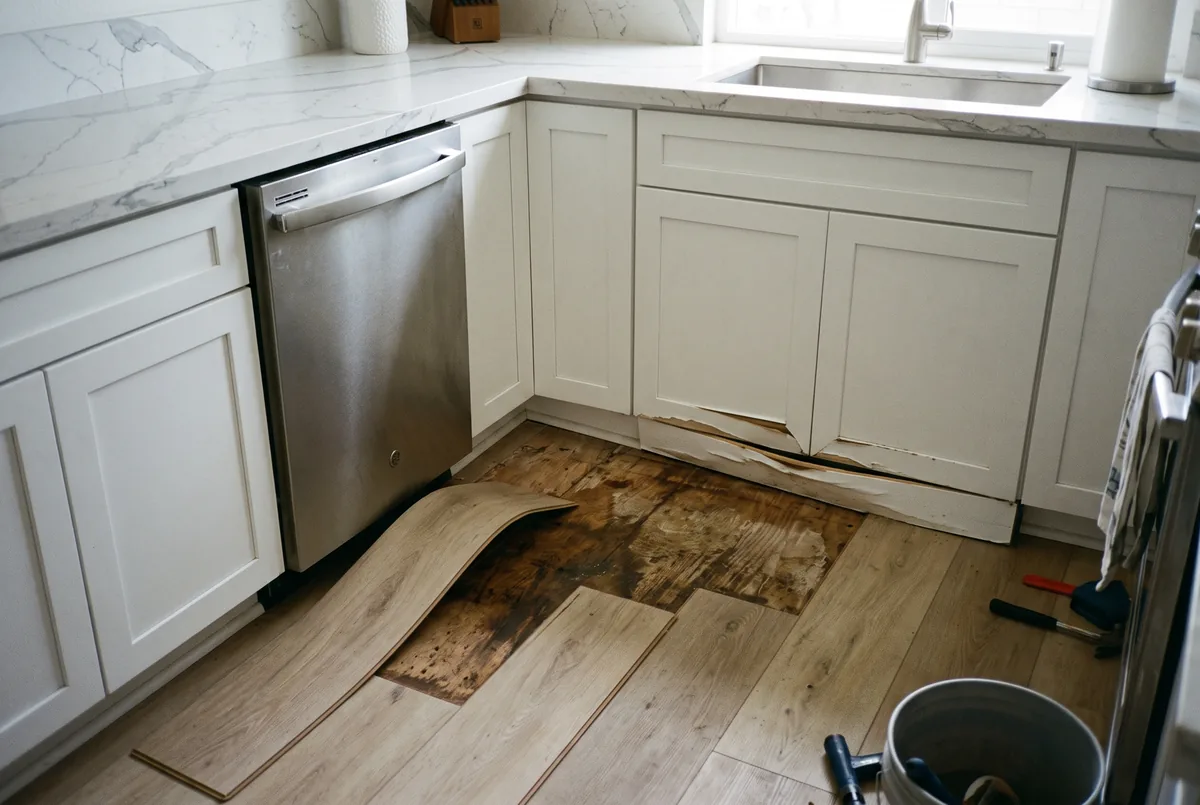
Dishwasher supply valve failure
A slow failure at the supply valve pushed water under the vinyl plank and into the cabinet run. The subfloor was wet across roughly 40 square feet by the time it surfaced.
The losses described above are representative of the work. The paired images illustrate the same failure and the same repair rather than showing one specific property.
Ranges below are what these jobs invoice at in this county before insurance. On a covered claim you pay your deductible and we bill the carrier for the rest.
| Scope of loss | Typical range | Time on site | What it covers |
|---|---|---|---|
| Single room, clean water | $1,200 – $3,500 | 3 – 5 days of drying | One wet room from a supply line or appliance. Extraction, 2 – 4 air movers, one dehumidifier, daily readings. |
| Multiple rooms or a full floor | $3,500 – $9,000 | 5 – 8 days of drying | Water tracked under walls into adjoining rooms. Cavity drying, baseboard removal, 6 – 12 air movers. |
| Category 3 / sewage | $7,000 – $18,000 | 7 – 14 days | Containment, removal of carpet, pad and drywall to 24 inches above the waterline, antimicrobial treatment, third-party clearance. |
| Mold remediation after a leak | $2,500 – $12,000 | 4 – 10 days | Negative-air containment with HEPA filtration, removal of affected materials, independent post-remediation verification. |
A water loss does not wait for a good month. Deductibles in Orange County commonly run $1,000 to $2,500, and an uninsured loss lands in full. We do not want that to be the reason a house stays wet for another week.
We hold the balance until your carrier pays on covered claims, so the only money that moves up front is the deductible. For uninsured work we split the job into stages — emergency mitigation first, repairs scheduled after — so the urgent half gets done now.
Tell us what happened and where. A restoration manager calls you back immediately, day or night, and a crew can be on site within the hour anywhere in Orange County.
Or call now — someone answers 24/7: (949) 555-0142
Crews stage from Irvine, Huntington Beach and Mission Viejo, which puts every city below inside a 60-minute response window at any hour. Coverage runs from Yorba Linda and Anaheim Hills in the north through the central cities to San Clemente on the south coast.
Irvine · Huntington Beach · Newport Beach · Costa Mesa · Mission Viejo · Yorba Linda · Anaheim Hills · Laguna Niguel · Lake Forest · Tustin · San Clemente · San Juan Capistrano · Fullerton · Santa Ana · Dana Point · Aliso Viejo
Most California homeowners policies cover sudden and accidental water damage, such as a burst supply line or a failed water heater. Gradual leaks, long-term seepage and flooding from outside the home are typically excluded and need separate flood coverage. We document the loss with moisture readings and photos on day one so your carrier can see the damage was sudden.
Three to five days is typical for a single-room loss with hardwood or drywall involvement. Dense materials such as plaster, lath and concrete can take longer. We take daily moisture readings and only remove equipment when materials reach documented dry standard.
Category 3 is grossly contaminated water: sewage backups, rising ground water and toilet overflows past the trap. It requires containment, removal of porous materials such as carpet, pad and drywall, and antimicrobial treatment before drying.
We dispatch from three points in Orange County and target on-site arrival within 60 minutes, 24 hours a day, including weekends and holidays.
No. We bill your carrier directly for covered work and collect only your deductible. You receive the same Xactimate documentation the adjuster reviews.
Yes, if you can reach the main shutoff safely. Do not enter standing water where outlets or panels are submerged. Call us and we will walk you through it on the phone.
Sometimes. Clean water on painted drywall that has not lost structural integrity can often be dried in place with cavity drying. Saturated, delaminated or contaminated drywall is removed.
We inspect with moisture meters and thermal imaging, and when growth is suspected we coordinate independent air and surface sampling. Clearance testing after remediation is performed by a third party, never by us.
S500 is the industry standard for professional water damage restoration. It defines water categories, drying goals, documentation and equipment placement. Our technicians hold current IICRC water restoration credentials.
Yes. We send scope, photos, moisture logs and daily drying records to your adjuster and handle supplements if hidden damage is found during demolition.
Coverage A (dwelling) pays to repair the structure, Coverage B covers detached structures, and Coverage C (personal property) covers contents. Water mitigation itself is generally paid under the dwelling coverage as part of the loss. What decides whether any of it applies is the cause: California policies cover sudden and accidental discharge, and exclude gradual leaks, seepage over time and surface flooding, which needs separate flood coverage.
Check three things. That the technicians hold current IICRC water restoration credentials, not just the company. That they document with daily moisture readings and an equipment log rather than a before-and-after photo. And that clearance testing after mold work is done by an independent lab rather than by the company that performed the remediation. Any firm that resists the third one is telling you something.
Mitigation or remediation stops the loss getting worse: extraction, containment, controlled demolition and drying. Restoration is the rebuild that follows — drywall, texture, paint, flooring and trim. Insurance usually treats them as separate line items, and they are frequently invoiced separately even when one company does both.
Emergency extraction of standing water, moisture mapping with meters and thermal imaging, controlled removal of unsalvageable materials, structural drying with air movers and dehumidifiers, daily documented readings until materials reach dry standard, antimicrobial treatment where the water was contaminated, and the rebuild afterwards. The documentation is part of the service, not an extra.
We cannot quote another company's pricing and would not try. What we can tell you is that restoration in Orange County is billed off the same industry-standard estimating platform by nearly every firm your carrier works with, so the line items are comparable between them. Ask any company for the written scope rather than a total — that is where the differences actually show.
Gradual leaks and long-term seepage, damage from deferred maintenance, surface flooding and rising ground water, and in most policies sewer backup unless a specific endorsement was added. Mold is usually capped rather than excluded when it followed a covered loss. The recurring theme is sudden versus gradual, which is why day-one documentation matters more than argument later.
In Orange County, $2,500 to $12,000 for most residential jobs. The range is wide because the price follows containment area and what has to be removed, not square footage of the house. A single bathroom wall behind a leak sits at the bottom; a whole-floor remediation with negative-air containment, drywall and cabinetry removal and third-party clearance testing sits at the top.
If the mold followed a sudden covered water loss — a burst supply line, a failed water heater — the carrier normally pays for remediation as part of that claim. If it grew from a long-term leak, high humidity or deferred maintenance, most California policies exclude it and the owner pays. Which of those it is turns on documentation from the first day.
Often, and conditionally. Policies commonly cap mold coverage at $5,000 to $10,000 even on a covered loss, and exclude it entirely when the cause was gradual. Read the mold endorsement on your own policy rather than assuming — the cap is the number that decides whether the job is fully covered.
Containment first: the affected area is sealed in polyethylene and put under negative pressure with a HEPA air scrubber so spores cannot travel. Then removal of affected porous materials, HEPA vacuuming and antimicrobial treatment of what remains, then drying the underlying moisture source. Finally an independent lab performs clearance testing — never the company that did the work.
Four to ten days for most residential jobs. Containment and removal take one to three days, drying the source three to five, and clearance testing adds a day for sampling plus lab turnaround. Rebuild follows separately once the clearance comes back.
For a small surface patch on a hard, non-porous surface, yes. Beyond about ten square feet the EPA recommends professional handling, and the reason is containment rather than cleaning: disturbing growth without negative pressure moves spores through the rest of the house. The bigger issue is that removing visible mold without finding the moisture feeding it guarantees it returns.
A failure in a water supply line running under or through the concrete slab a house sits on. Most of Orange County is built slab-on-grade with copper lines in the concrete, so it is a common failure here. Signs are a warm spot on the floor, running water heard with everything off, a water meter that turns with all fixtures closed, and a bill that climbs without a change in habits.
Find and stop the source first — usually a supply line, a roof leak or a clogged air-handler condensate line. Then remove wet insulation above the drywall, because it holds water long after the board looks dry. Drywall that is stained but structurally sound can often be dried and refinished; sagging or delaminated board comes out. Texture and paint follow once readings confirm dry standard.
Renters policies cover your belongings, not the building. If a supply line failure ruins your furniture and electronics, that is your claim; the structure, the flooring and the drywall belong to the owner's policy. Both claims depend on photographs taken before anything is moved.
Roughly 200 to 400 gallons an hour at typical Orange County municipal pressure of 50 to 80 psi. A line that fails while a family is at work will put several thousand gallons into a slab foundation before anyone sees it, which is why hidden-leak losses are usually larger than visible ones.
Class 1 is the least amount of absorbed water, affecting part of one room with low-porosity materials. Class 2 covers an entire room including carpet and pad with water wicking up walls under 24 inches. Class 3 comes from overhead, saturating ceilings, walls, insulation and subfloor. Class 4 involves deeply held water in materials such as hardwood, plaster, concrete and crawl-space soil, and needs specialty low-humidity drying.
The target is specific humidity below the outside air and materials at or under 16 percent moisture content for wood framing, and under 1 percent for gypsum. We log psychrometric readings — temperature, relative humidity and grains per pound — daily, and only pull equipment when the readings hold.
Most of the county is built on slab-on-grade foundations, with copper supply lines run under or through the concrete. Soil chemistry, abrasion where the line passes through the slab and 40-plus years of age on a large share of the housing stock all shorten line life. Warm spots on the floor, a running meter with every tap closed and unexplained bill increases are the usual first signs.
The S500 baseline is one air mover for the first 10 to 16 linear feet of wet wall, plus one for each additional 10 to 16 feet, with an added unit per wet inside corner. A 12-by-14 room with two wet walls typically takes three to four movers and one dehumidifier sized to the cubic footage.
A HEPA air scrubber captures 99.97 percent of particles at 0.3 microns, which covers mold spores at 2 to 10 microns. It works only inside sealed containment with negative pressure — running one in an open room moves spores around rather than removing them.
Given moisture, an organic surface and room temperature, growth can begin in 24 to 48 hours and becomes visible in roughly a week. That window is the reason emergency response is measured in hours, not days.
Mitigation stops the loss getting worse: extraction, containment, controlled demolition and drying. Restoration is the rebuild afterwards — drywall, paint, flooring and trim. Insurance usually treats them as two line items, and they are often invoiced separately.
Often, if drying starts within about 48 hours. Engineered planks delaminate faster than solid wood. We use floor drying mats that pull moisture up through the boards rather than removing them, and monitor moisture content until it matches the unaffected areas of the same floor.
The carrier normally covers it as part of a covered mold claim. We never perform our own clearance testing — the lab that verifies the work cannot be the company that did the work.
We supply the moisture logs, equipment records and photo documentation supporting each line, and file a supplement. Denials most often turn on whether the loss was sudden or gradual, which is exactly what day-one documentation settles.
Homes built before 1980 can contain asbestos in popcorn ceilings, floor tile and drywall mud, and lead in paint. California requires testing before disturbing suspect materials. We test first and bring in a licensed abatement contractor when a sample comes back positive.
That is a decision for your carrier, not for us. What we can say is that unreported water losses tend to surface later as mold or structural claims that are harder to get covered, and that a documented sudden loss is the strongest position to file from.
Shut the water off at the main if you can reach it safely. Kill power to the affected area at the breaker if water is anywhere near outlets. Move what you can lift. Photograph everything before you move it, including the source. Then call — we will talk you through the rest.
Standing water right now? Call (949) 555-0142 — someone answers 24/7.