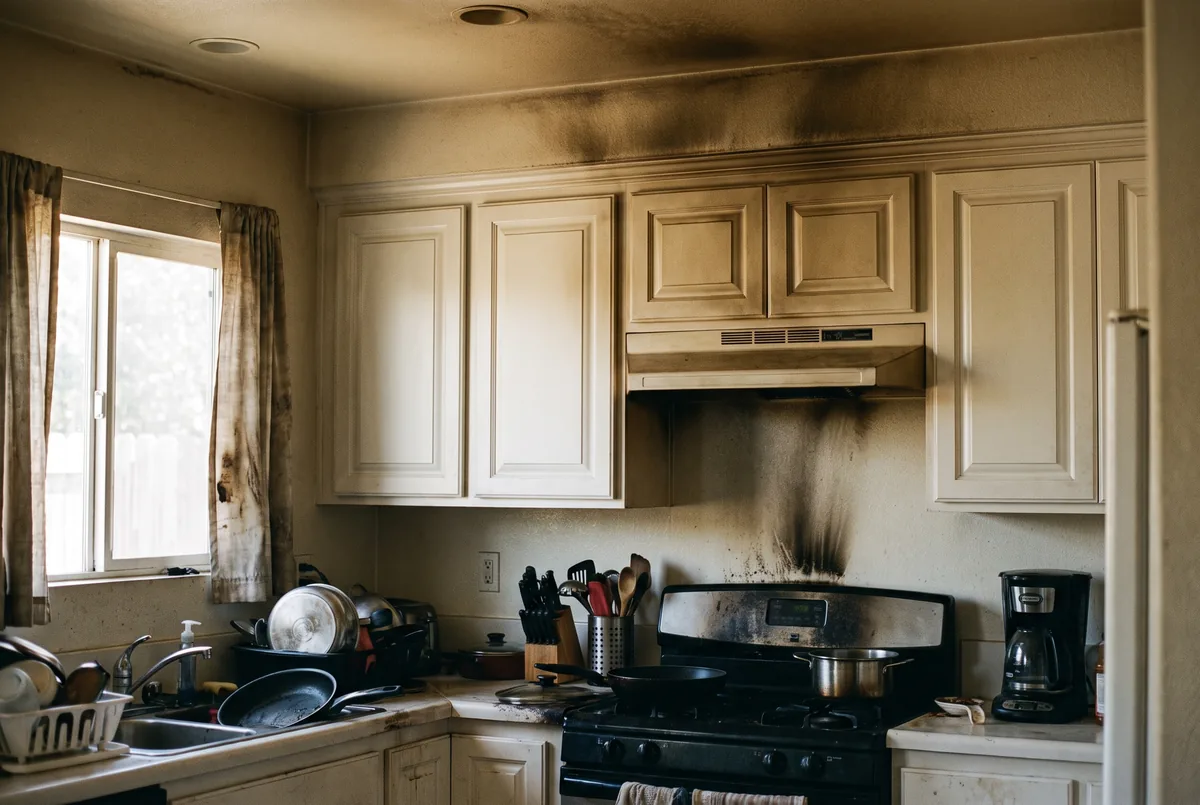
Protein residue from a kitchen fire
Nearly invisible, and the worst odor of the five residues. People clean the visible mess, find the smell still there a fortnight later, and conclude it cannot be removed.
24/7 Emergency — 60 Minutes24/7 Emergency Response — Crews Dispatched in 60 Minutes
(949) 555-0142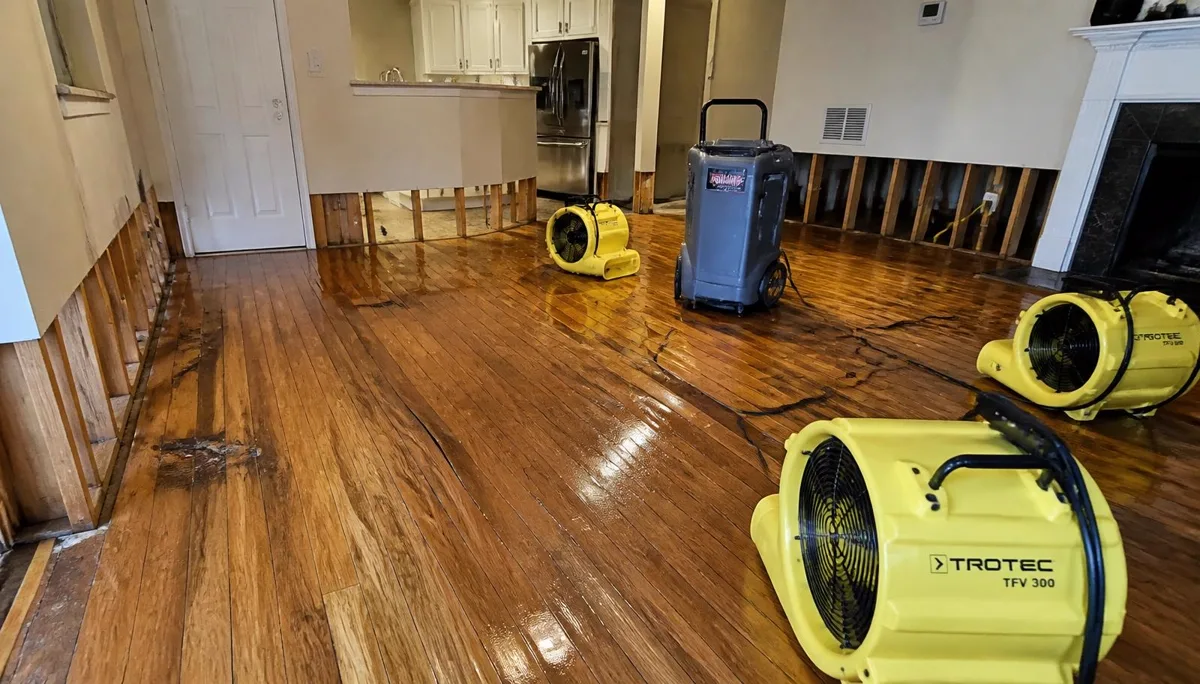
Board-up the same night, soot removed by residue type rather than scrubbed, odor taken out at the source, and the suppression water dried before it becomes the second claim.
One of four services Orange County Rapid Restoration runs out of the same crews and the same equipment.
The fire department leaves a building open. Windows are broken for ventilation, doors are forced, and holes are cut in the roof to let heat and gas out — all correct, all necessary, and all of it leaves the structure exposed to weather and to anyone who walks past. Your policy obliges you to protect the property from further damage from that point on.
So the first visit is roof tarping, boarding of openings and, on a larger loss, temporary fencing. It is not a formality. A structure left open through one Orange County rain turns a clean fire claim into an argument about which loss caused what, and a burglary through an unsecured opening is a separate deductible and a separate fight.
Cleaning fire residue with a general-purpose approach is how a salvageable surface becomes a replacement. What was burning decides the residue, and the residue decides the method:
Protein residue, from a kitchen fire, is nearly invisible — a thin amber lacquer on cabinet faces and inside cupboards — and it carries the most punishing odor of any of them. People clean the visible mess, find the smell still there in a fortnight, and conclude the odor cannot be removed. Dry or ionized smoke, from a fast hot fire, is powdery and sits on surfaces; it cleans dry, and wetting it first drives it into the substrate. Wet smoke, from a slow low-heat smolder, is sticky and smeary, leaves webs in corners, and needs solvent rather than water. Fuel oil soot, from a furnace puff-back, is greasy and spreads through every duct run in the building. And extinguisher residue — the monoammonium phosphate from a dry chemical unit — is mildly corrosive and has to come off metal and electronics quickly.
This is also the honest answer to the household remedies people find first. Dish soap, vinegar and WD-40 all do something to soot on a hard surface, and all of them wet a residue that in three of the five cases should be removed dry. Soot is acidic; the damage it does to metal, glass and finishes continues for as long as it sits there, and a smeared surface is usually a permanently marked one.
An inch-and-a-half attack line moves on the order of 125 gallons a minute. Ten minutes of suppression puts more than a thousand gallons into the building, and it goes where all water goes — into insulation, into wall cavities, through the ceiling into the floor below, under the flooring on the level beneath the fire.
Structural drying therefore runs alongside the soot work rather than after it. A fire loss that is cleaned and rebuilt without the water being dried and documented comes back as a mold claim two months later, and by then the fire claim is closed. This is the part of a fire job most likely to be underscoped, and it is the reason a water restoration firm is the right one to be holding the meters.
Smoke odor lives in porous material and in the air handling system. The sequence that works is fixed: remove charred and heavily contaminated porous material, HEPA-vacuum everything, clean surfaces by residue type, clean the HVAC system and its ducts — because otherwise it redistributes the odor every time it cycles — and seal remaining substrates with a shellac-based primer.
Equipment comes last, not first. Hydroxyl generators run where people are living in the building. Ozone is used only in a structure nobody is occupying, because it is a respiratory irritant. Thermal fogging has a place on a heavy loss, after the cleaning rather than instead of it. Anything sold as a treatment that skips the removal step is deodorizing the air around a source that is still there.
Your structure and your belongings are covered under different limits. Contents are also where a claim most often underpays, for a mundane reason: things get thrown out in the first week, before anyone inventoried them, and an item with no record is an item with no settlement.
So the contents process is pack-out rather than clear-out. Salvageable items are inventoried, photographed, cleaned off site and stored until the building is habitable. Non-salvageable items are documented line by line before they leave. Electronics are cleaned before anyone tries to switch them on, because soot is conductive as well as acidic and powering up a contaminated board is how a repairable device becomes a replacement.
Nearly invisible, and the worst odor of the five residues. People clean the visible mess, find the smell still there a fortnight later, and conclude it cannot be removed.
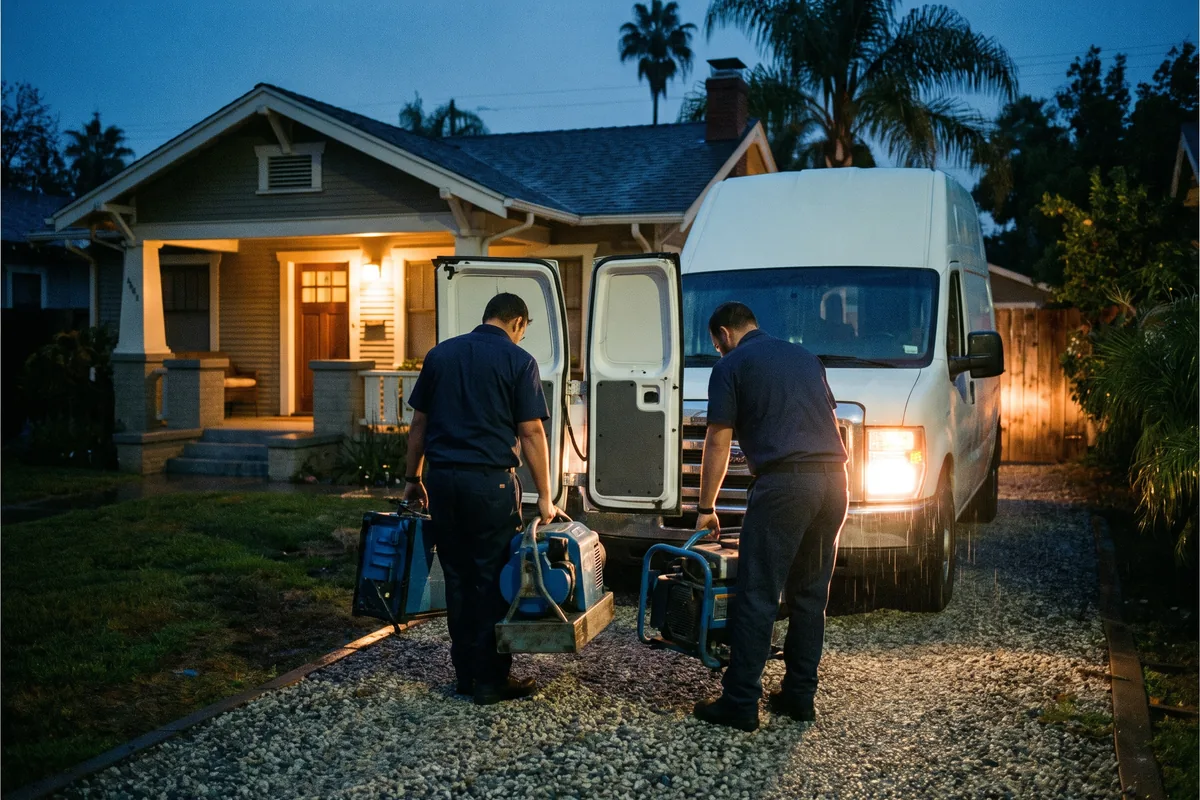
The fire department leaves the structure open. Your policy obliges you to protect it from that point, which is why the first visit is tarping and boarding rather than cleaning.
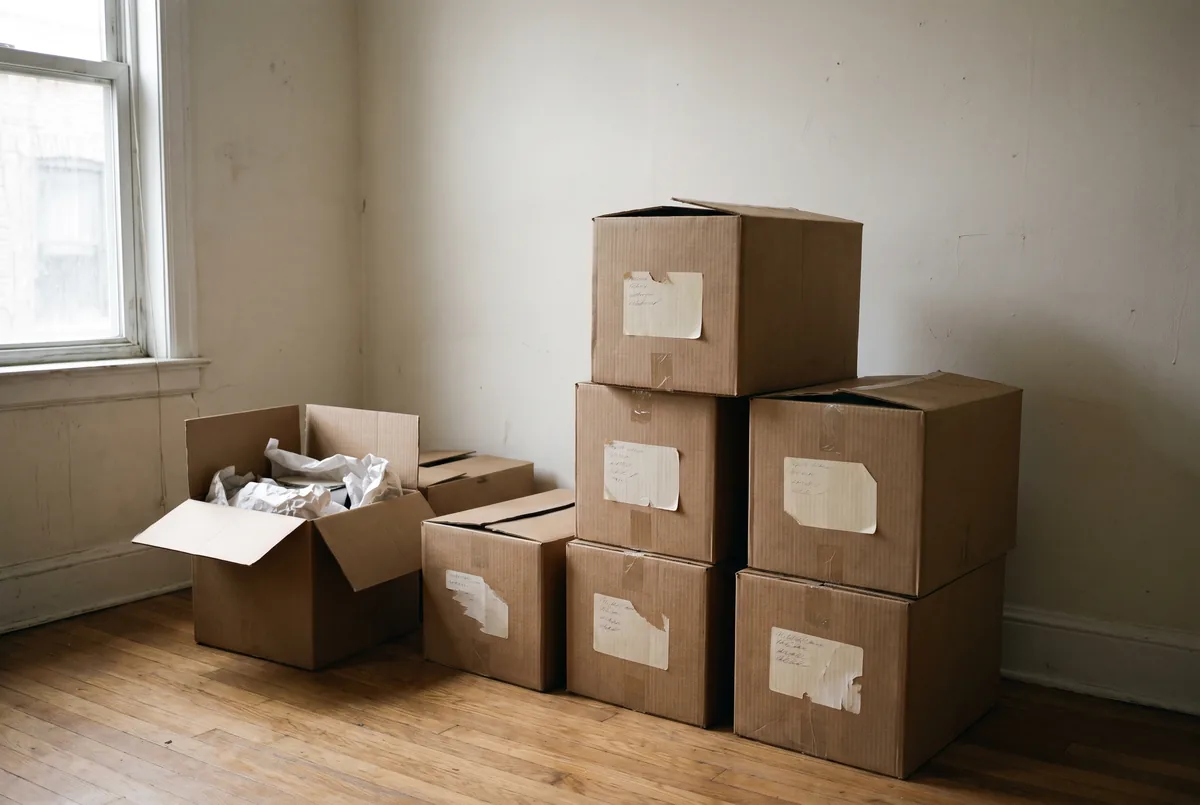
Contents are a separate coverage limit and the usual place a claim underpays. Everything is inventoried and photographed before it leaves, salvageable or not.
24/7 dispatch, shutoff guidance and crew assignment.
Meters and thermal imaging map every wet material.
Truck-mount and portable extraction of standing water.
Air movers, dehumidifiers and daily documented readings.
Dry standard confirmed, then rebuild and finish work.
Claims are won or lost on documentation. From the first hour we photograph the source, log the affected materials and record the water category, so your adjuster sees a sudden, accidental loss rather than a maintenance issue.
We take moisture readings in every wet material — subfloor, framing, insulation and drywall cavities — and repeat them daily until each one reaches documented dry standard. Those logs go straight into the claim file.
We bill your carrier directly using industry-standard estimating software, so you pay your deductible and nothing more on covered work. If hidden damage appears during demolition, we file the supplement for you.
Crews stage from Irvine, Huntington Beach and Mission Viejo, which puts every city below inside a 60-minute response window at any hour. Coverage runs from Yorba Linda and Anaheim Hills in the north through the central cities to San Clemente on the south coast.
Tell us what happened and where. A restoration manager calls you back immediately, day or night, and a crew can be on site within the hour anywhere in Orange County.
Or call now — someone answers 24/7: (949) 555-0142
Most of the time, yes, and the deciding factor is structural rather than cosmetic. Char that has consumed more than about a fifth of a load-bearing member's cross-section means replacement rather than cleaning; framing that is blackened on the surface is usually sound underneath and gets cleaned, sealed and left in place. The question is answered by a structural assessment, not by how bad the room looks.
Mitigation — board-up, water extraction, soot removal, deodorization and pack-out — commonly runs one to three weeks. The rebuild is a construction project and runs on permits and materials: a single room in a month or two, a substantial loss in six to twelve. The two are separate scopes and separate estimates, and anyone quoting the whole thing as one number before the structure has been assessed is guessing.
Hard non-porous items almost always: dishes, glass, metal, sealed furniture, jewelry. Textiles usually, through professional laundering or ozone chamber treatment. Upholstered furniture and mattresses rarely earn their restoration cost. Electronics can often be saved but must be cleaned before they are powered up, because soot is acidic and conductive. Food, bottled drinks and medication go, including sealed items — heat compromises them through the packaging.
No, and it is the most common expensive mistake on a fire loss. Paint over unwashed soot and the residue keeps outgassing through it, so the odor returns and the finish discolors or blisters within months. The sequence is clean by residue type, then seal with a shellac-based primer, then paint. Skip the first step and you pay for the third one twice.
By removing what is producing it. Charred and heavily contaminated porous material comes out, surfaces are cleaned by residue type, the HVAC system and ducts are cleaned because they redistribute odor every time the system runs, and remaining substrates are sealed. Only then does equipment come in — hydroxyl generators where people are living in the building, ozone only in a structure nobody is occupying. Anything that starts with a machine and skips the cleaning is deodorizing the air around the source.
It scales with the number of openings and the roof area to be tarped, and it is normally covered as part of the loss because your policy obliges you to protect the property from further damage. That obligation is the reason it is not optional: a structure left open to rain or entry can turn a covered fire claim into an argument about the second loss.
Food and medication, including anything sealed. Cosmetics and opened toiletries. Baby bottles, pacifiers and anything a child mouths. Mattresses and upholstered pieces where residue has penetrated the foam. Everything else gets inventoried and assessed rather than binned, because what is thrown out without documentation is money left on the claim.
California requires disclosure of known material facts, and a past fire is one, so it becomes a question a buyer asks. What answers it is documentation: the permits, the engineering sign-off, the clearance on air quality, and a paper trail showing the work was done to code rather than cleaned up quietly. A properly documented restoration is a very different conversation from an undocumented one.