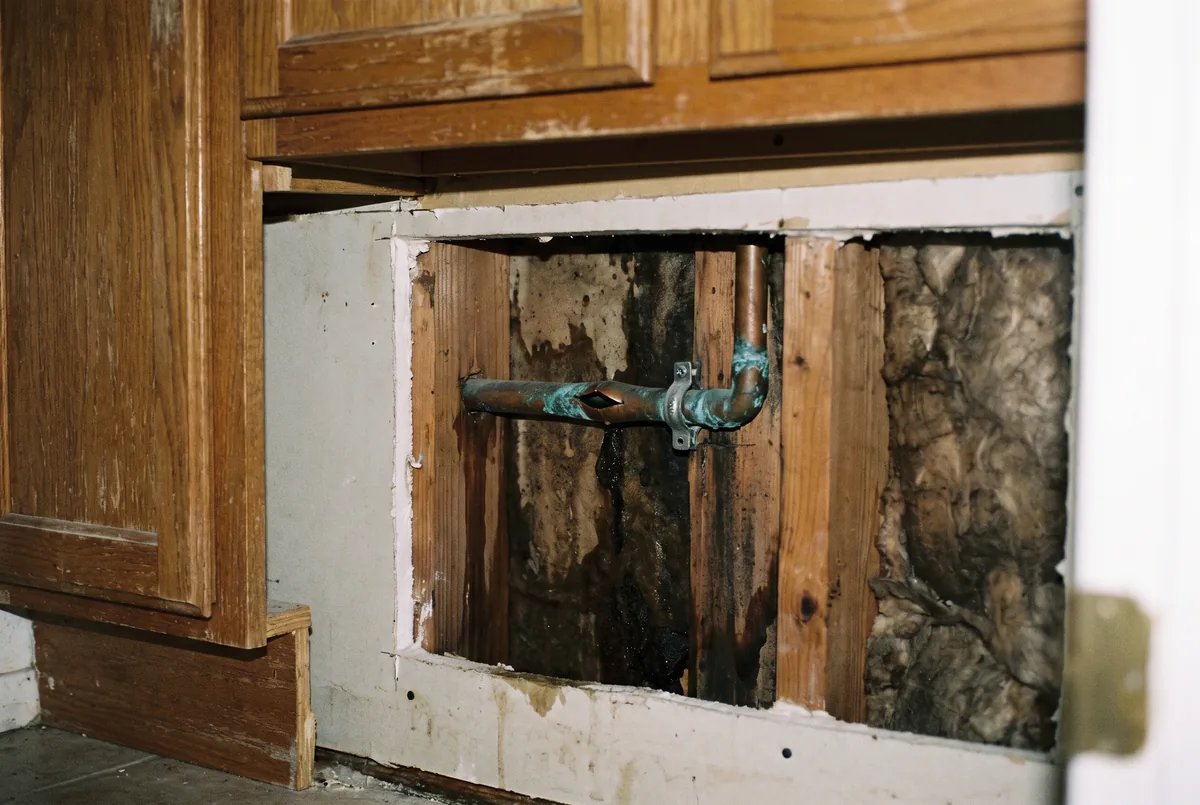
The demolition drying requires
Drying a wet wall in a 1962 house means cutting drywall with joint compound that may contain asbestos. That cut is the moment the question has to already be answered.
24/7 Emergency — 60 Minutes24/7 Emergency Response — Crews Dispatched in 60 Minutes
(949) 555-0142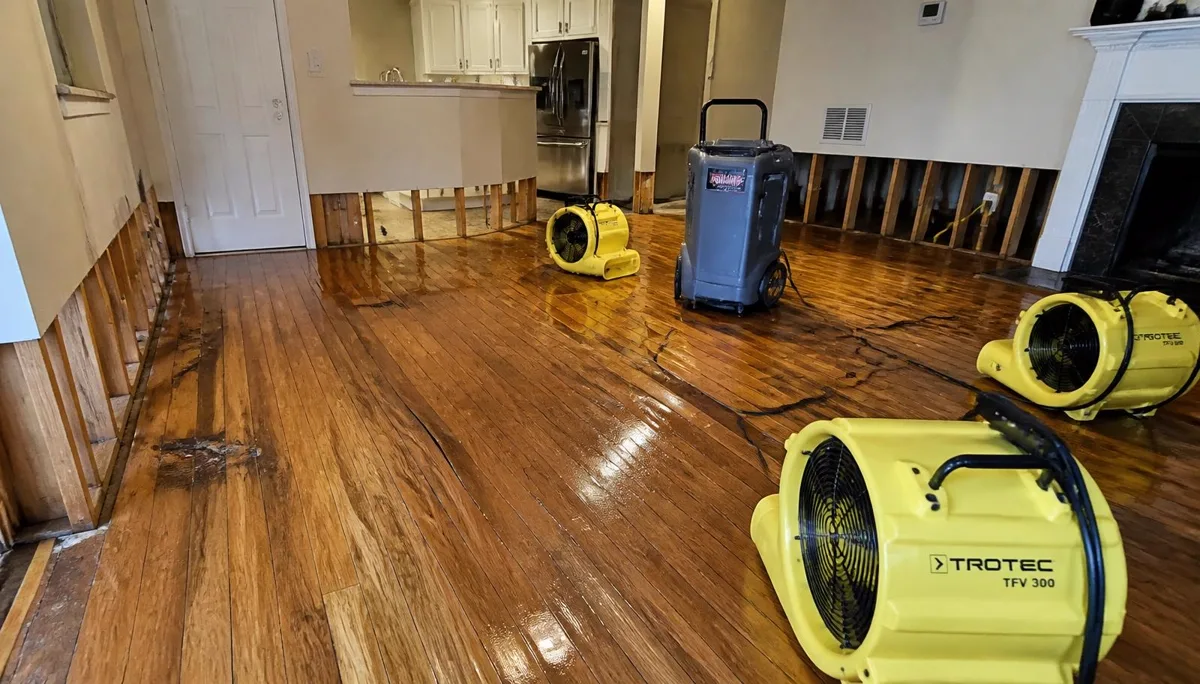
In California, suspect materials in a pre-1980 building have to be tested before they are disturbed. A third of Santa Ana and Fullerton predates 1960, which is why this comes up on our jobs more than people expect.
One of four services Orange County Rapid Restoration runs out of the same crews and the same equipment.
Popcorn and acoustic ceiling texture, vinyl floor tile and the black mastic under it, drywall joint compound, pipe and duct wrapping, and some exterior stucco and roofing. Broadly, materials installed before the early 1980s.
Intact and undisturbed, none of it is a hazard. The hazard is created by demolition, which is exactly what a water loss requires — which is why testing happens before the saw comes out rather than after.
Drying a wet wall in a 1962 house means cutting drywall with joint compound that may contain asbestos, and pulling flooring that may sit on asbestos mastic. Doing that without testing puts fibers into a house that people are living in.
We test first, and where a sample comes back positive we bring in a licensed abatement contractor to handle that portion under containment before drying resumes.
Both are abatement work under containment, both are triggered by the same wet wall, and both have to clear before drying equipment goes back in. They are sequenced together and scoped separately. If the same ceiling has growth on it as well, that is mold remediation and it is priced on its own.
Drying a wet wall in a 1962 house means cutting drywall with joint compound that may contain asbestos. That cut is the moment the question has to already be answered.
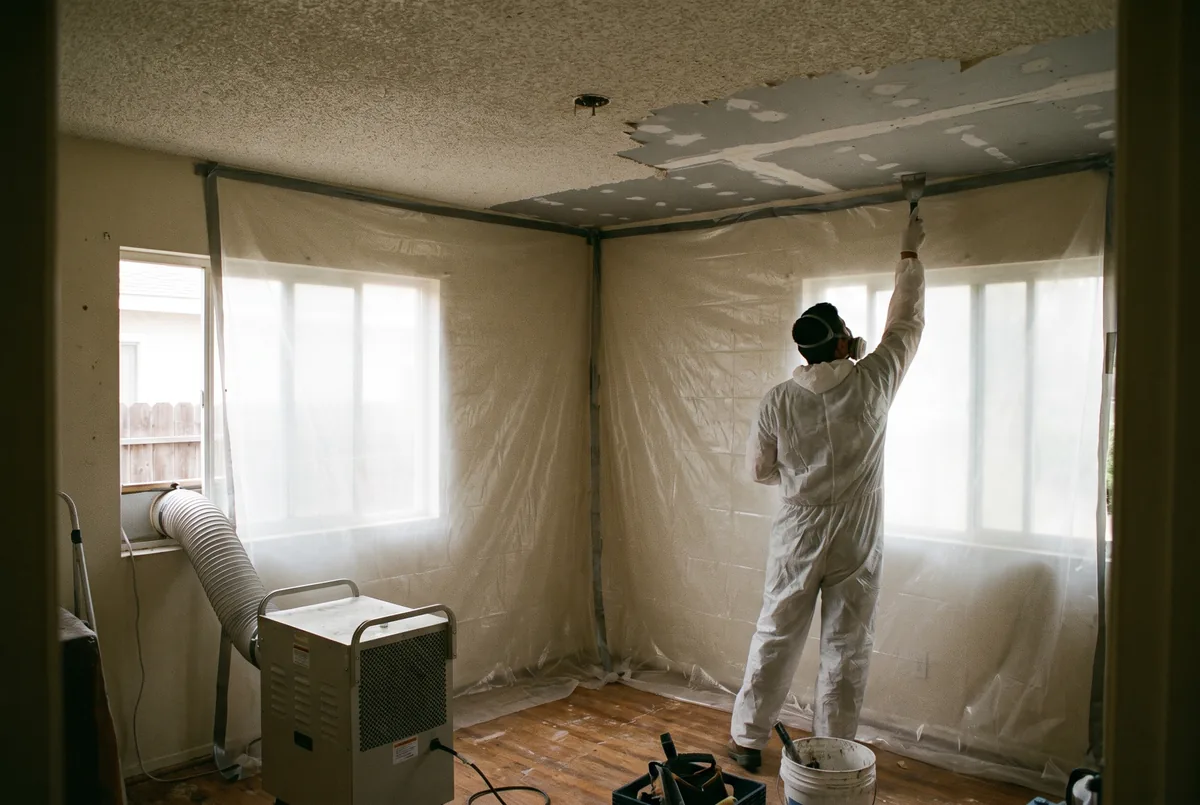
Where a sample comes back positive, that portion is handled under containment by a licensed abatement contractor, with the air exhausted outside rather than into the house.
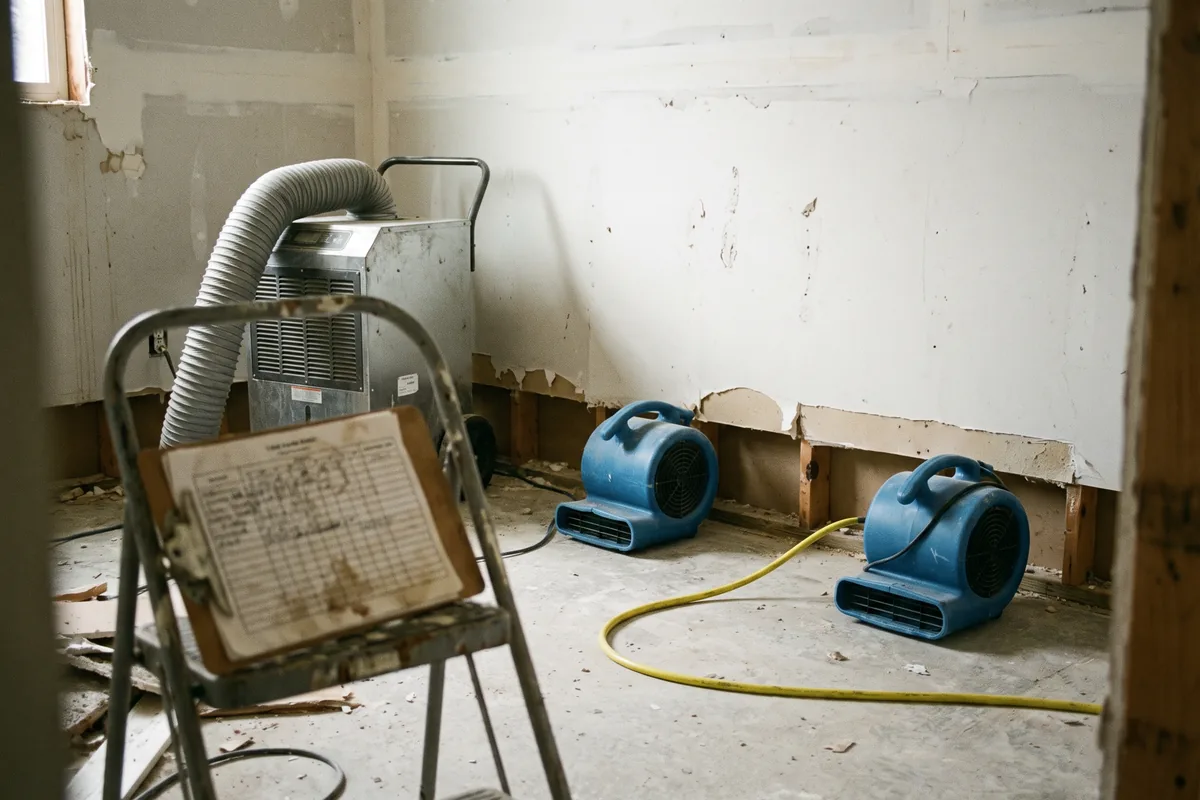
Equipment goes back in once the affected zone has been cleared, not before. Air movers running in an uncleared space is the worst possible sequence.
24/7 dispatch, shutoff guidance and crew assignment.
Meters and thermal imaging map every wet material.
Truck-mount and portable extraction of standing water.
Air movers, dehumidifiers and daily documented readings.
Dry standard confirmed, then rebuild and finish work.
Claims are won or lost on documentation. From the first hour we photograph the source, log the affected materials and record the water category, so your adjuster sees a sudden, accidental loss rather than a maintenance issue.
We take moisture readings in every wet material — subfloor, framing, insulation and drywall cavities — and repeat them daily until each one reaches documented dry standard. Those logs go straight into the claim file.
We bill your carrier directly using industry-standard estimating software, so you pay your deductible and nothing more on covered work. If hidden damage appears during demolition, we file the supplement for you.
Crews stage from Irvine, Huntington Beach and Mission Viejo, which puts every city below inside a 60-minute response window at any hour. Coverage runs from Yorba Linda and Anaheim Hills in the north through the central cities to San Clemente on the south coast.
Tell us what happened and where. A restoration manager calls you back immediately, day or night, and a crew can be on site within the hour anywhere in Orange County.
Or call now — someone answers 24/7: (949) 555-0142
Commonly $1,500 to $4,000 for a contained single-room removal such as ceiling texture or floor tile, and considerably more for whole-house work. Testing itself is inexpensive — usually $75 to $200 per sample — and it is what determines whether abatement is needed at all.
The affected material can be fully removed and clearance-tested. Whether every asbestos-containing material in the building is removed is a separate decision, and often the answer is no: intact material that will not be disturbed is frequently left in place and documented rather than removed.
Sometimes, when abatement is required in order to repair a covered loss. If a burst pipe means cutting a ceiling that tests positive, carriers often cover the abatement as part of the repair. Removing asbestos that has nothing to do with a loss is a maintenance cost, not a claim.
Very likely somewhere, though usually from later renovations rather than the original construction. A century-old house in Orange County has typically been re-roofed, re-floored and re-textured across the decades, and mid-century work is exactly the era where asbestos-containing materials were standard.
California requires sellers to disclose known material facts about a property, and known asbestos is one. This is a legal question for your agent or attorney rather than for us. What we can supply is the test result and the abatement documentation for work we were involved in.
In unaffected areas yes, and inside the containment no. Sequencing matters: abatement is completed and cleared in the affected zone before drying equipment goes back in, because air movers in an uncleared space are the worst possible thing to run.