Burst pipe or supply line
Pressurized lines can release hundreds of gallons an hour into walls and flooring.
24/7 Emergency Response — Crews Dispatched in 60 Minutes
(949) 555-0142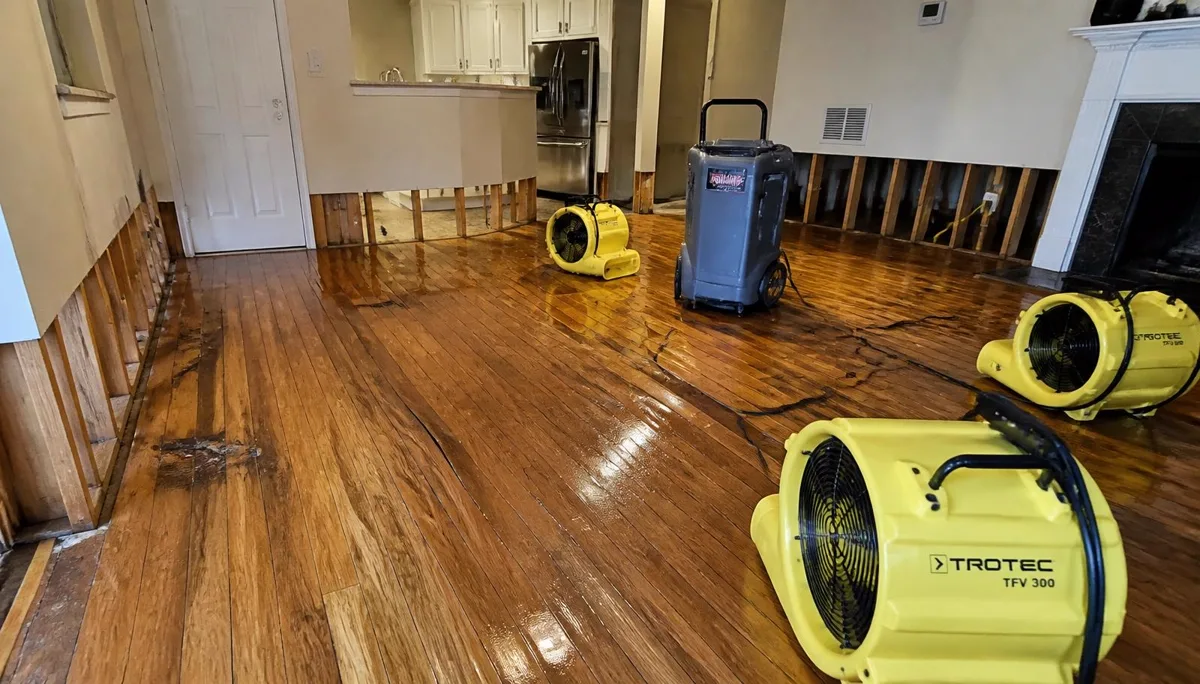
Serving Yorba Linda, California
Yorba Linda has the highest ownership and the highest share of detached single-family homes of any city we cover.
Orange County Rapid Restoration dispatches to Yorba Linda around the clock. What follows is what the losses look like here specifically, and what the response involves.
83%
Owner-occupied
88%
Single-family homes
41%
Built before 1980
$156,482
Median household income
Housing figures: US Census ACS tables B25003, B25034, B25024 and B19013, aggregated across Yorba Linda’s ZCTAs. Water service: Yorba Linda Water District.
Eighty-eight percent of Yorba Linda's housing is detached single-family and eighty-three percent is owner-occupied, on lots that are large by Orange County standards. Big single-storey and two-storey plans mean long horizontal supply runs, and a pinhole at one end of a run can put water under flooring across several rooms before anything surfaces.
Forty-one percent of the stock predates 1980. Those homes are at the age where original copper under a slab starts producing pinholes, and the size of the floor plan means the water has room to travel unseen.
Large lots come with irrigation systems, and a failed valve or a broken lateral next to the house saturates the soil against the foundation. That water does not enter through a dramatic break; it wicks through the slab edge or under the weep screed and shows up as damp baseboards and a musty smell along one exterior wall.
It is also frequently mistaken for a plumbing leak. Metering the pattern tells them apart: a supply leak is warm and centred, irrigation intrusion is cool and follows the exterior wall line.
Pick the closest match. Every situation below is handled by our crews tonight.
Pressurized lines can release hundreds of gallons an hour into walls and flooring.
Warm spots, high water bills and buckling floors usually mean a leak under the slab.
Tank ruptures flood garages and adjacent rooms, often soaking shared drywall.
Condensate lines clog and drip into ceilings for weeks before the stain appears.
Dishwashers, washing machines and supply valves fail without warning.
Category 3 water requires containment, removal of porous materials and sanitizing.
Insulation holds moisture long after the rain stops and hides active growth.
Visible growth after a water event needs containment before any repair work.
Claims are won or lost on documentation. From the first hour we photograph the source, log the affected materials and record the water category, so your adjuster sees a sudden, accidental loss rather than a maintenance issue.
We take moisture readings in every wet material — subfloor, framing, insulation and drywall cavities — and repeat them daily until each one reaches documented dry standard. Those logs go straight into the claim file.
We bill your carrier directly using industry-standard estimating software, so you pay your deductible and nothing more on covered work. If hidden damage appears during demolition, we file the supplement for you.
24/7 dispatch, shutoff guidance and crew assignment.
Meters and thermal imaging map every wet material.
Truck-mount and portable extraction of standing water.
Air movers, dehumidifiers and daily documented readings.
Dry standard confirmed, then rebuild and finish work.
Tell us what happened and where. A restoration manager calls you back immediately, day or night, and a crew can be on site within the hour anywhere in Orange County.
Or call now — someone answers 24/7: (949) 555-0142
Weeks to months of continuous wetting for genuine rot. Long before that, an engineered plank core swells and delaminates within about forty-eight hours, subfloor adhesive lets go, and mold establishes. On a large single-storey plan where a slab leak has run unseen, all three are usually already underway when we arrive.
The pattern tells you. A hot-side plumbing leak under a slab produces a warm area with a centre. Irrigation or drainage intrusion is cool and tracks the exterior wall in a line. We meter both the floor and the wall base, and check whether readings fall after the irrigation is off for forty-eight hours.
Yorba Linda Water District serves most of the city plus parts of Placentia, Anaheim and Brea. A leak on the district side of the meter is theirs; everything past the meter is the property owner's, which is where nearly all our work happens.
Large floor plans on their own lots mean long horizontal supply runs, so a pinhole at one end can put water under flooring across several rooms before anything surfaces. It also means there is no neighbour below to notice, so detection depends on the household.
Shut every fixture and watch the meter. If the low-flow indicator turns, water is moving somewhere with nothing open — most often under a slab or in an irrigation lateral. Both are findable in an hour with the right instruments and neither improves with waiting.
Copper does not fail on a schedule, but forty-five to fifty years is the band where pinholes start appearing under slabs. If your home is from that era and has never been repiped or rerouted, the honest answer is that it is in the window rather than that it is due.
Yes. It saturates the soil against the foundation, and water wicks in under the weep screed or at the slab edge. There is no dramatic break and no puddle — just damp baseboards, a musty smell along one wall, and readings that stay high until the irrigation is shut off.
More equipment than the square footage suggests, because the count follows the wet perimeter. A long spread through a hallway into bedrooms needs an air mover per ten to sixteen linear feet of wet wall plus one per wet inside corner, and a dehumidifier sized to the total cubic volume.
Yes — drywall, texture, paint, baseboard and flooring after the structure reaches dry standard. Insurance usually treats mitigation and repair as separate line items, and we scope them separately so you can see what each one covers.