What to do about it
Sewage Backup Cleanup
Sewage is Category 3 water: grossly contaminated. It is not a mopping job, and the difference from a clean water loss is that porous materials do not get dried — they get removed.
- 22 years restoring Orange County properties
- IICRC S500 certified technicians who bill your insurer directly
- On site in 60 minutes, 24 hours a day
Orange County Rapid Restoration handles this across the county, 24 hours a day.
Why this one is handled differently
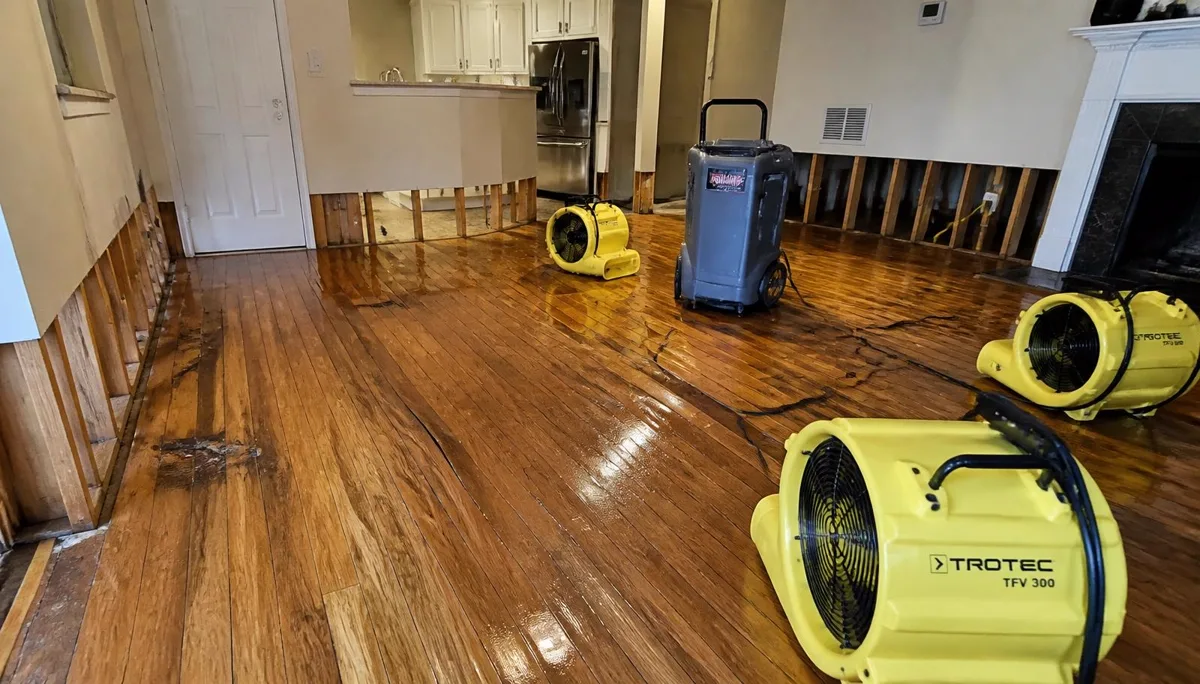
Category 3 water carries bacteria and other pathogens. The standard response is containment of the affected area, removal of all porous materials that contacted the water — carpet, pad, drywall to a defined line above the waterline, insulation, particleboard — HEPA vacuuming and antimicrobial treatment of what remains, and only then drying.
Drying contaminated material in place leaves the contamination in the building. That is the single most common shortcut in this category and the reason some homes are done twice.
What to do before anyone arrives
Keep people and pets out of the affected area. Do not run the HVAC system, because it will move contaminated air through the rest of the house. Do not attempt to clean it yourself with a household vacuum. If the backup is ongoing, stop using fixtures upstream of it.
Photograph the extent from the doorway rather than wading through it.
Our restoration process
Emergency call
24/7 dispatch, shutoff guidance and crew assignment.
Inspection and moisture mapping
Meters and thermal imaging map every wet material.
Water extraction
Truck-mount and portable extraction of standing water.
Structural drying
Air movers, dehumidifiers and daily documented readings.
Clearance testing and repair
Dry standard confirmed, then rebuild and finish work.
Request a free inspection
Tell us what happened and where. A restoration manager calls you back immediately, day or night, and a crew can be on site within the hour anywhere in Orange County.
Or call now — someone answers 24/7: (949) 555-0142
Sewage Backup Cleanup: common questions
What is the best way to clean up a sewage backup?
Containment, removal of affected porous materials, HEPA vacuuming and antimicrobial treatment of the non-porous surfaces that remain, then structural drying and verification. The order matters — drying first traps contamination in materials that should have come out.
Does homeowners insurance cover sewage cleanup?
Not under a standard policy in most cases. Sewer and drain backup is normally a separate endorsement that has to be added, often for a modest annual amount. Check whether you carry it before you need it; adding it afterwards does not apply to the loss you just had.
Can carpet be cleaned after a sewer backup?
No. Carpet and pad that contacted Category 3 water are removed, not cleaned. The pad is an open-cell sponge and the backing holds contamination that surface cleaning does not reach, whatever a cleaning company tells you it can do.
What is the best disinfectant after a sewage backup?
An EPA-registered antimicrobial applied to hard surfaces after the porous materials have been removed, not before. Applying disinfectant over saturated carpet or drywall treats the surface of a material that still has to come out, which is why sequence matters more than product choice.
How long do sewage bacteria survive on surfaces?
Days to weeks depending on the organism and how damp the surface stays, which is the reason drying alone is not treatment. The remediation removes the material and treats what remains rather than waiting the problem out.
How long does sewage cleanup take?
Seven to fourteen days for most residential backups, because removal, treatment, drying and verification are sequential rather than simultaneous. Rebuild follows separately once the structure is dry and verified.