Burst pipe or supply line
Pressurized lines can release hundreds of gallons an hour into walls and flooring.
24/7 Emergency Response — Crews Dispatched in 60 Minutes
(949) 555-0142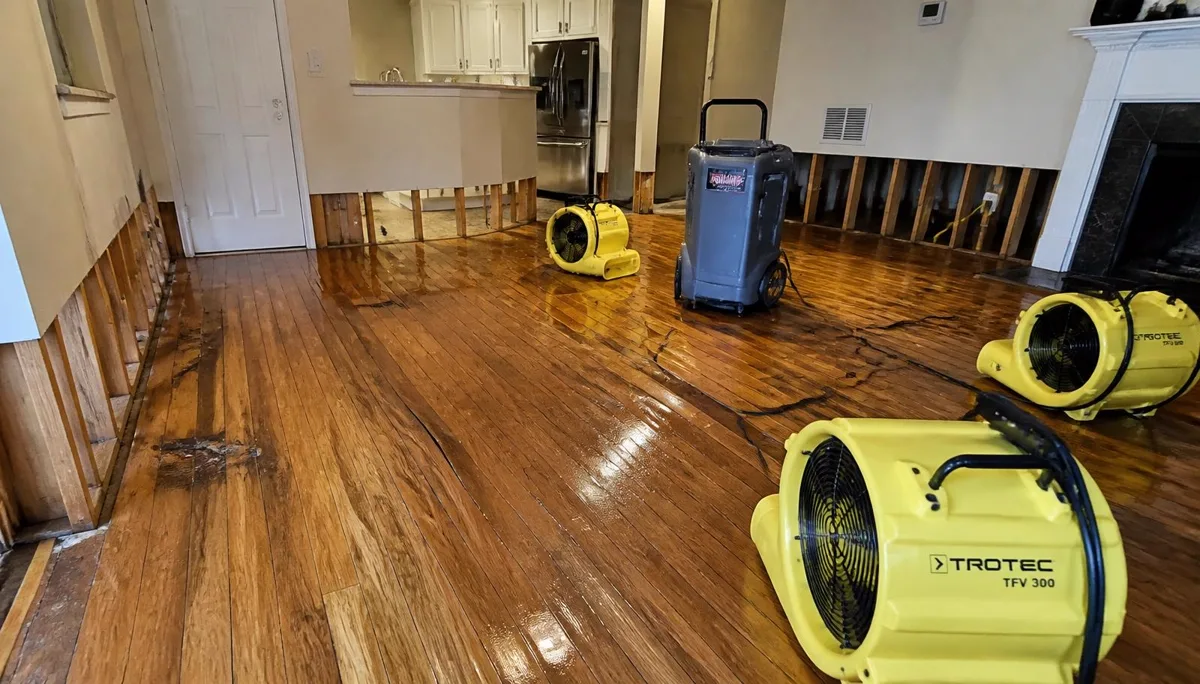
Serving Newport Beach, California
Newport Beach combines high property values with peninsula and island construction sitting close to the water table.
Orange County Rapid Restoration dispatches to Newport Beach around the clock. What follows is what the losses look like here specifically, and what the response involves.
59%
Built before 1980
16%
Built before 1960
$155,935
Median household income
48%
Owner-occupied
Housing figures: US Census ACS tables B25003, B25034, B25024 and B19013, aggregated across Newport Beach’s ZCTAs. Water service: City of Newport Beach Utilities Department, with Mesa Water District serving parts of the city.
Construction on Balboa Peninsula, Balboa Island and Lido sits near sea level with groundwater not far below the slab. That changes a water loss in two ways. Drying is harder because the ground beneath the structure is a moisture source that does not stop, and any excavation to reach a failed line under a slab can meet groundwater before it meets the pipe.
It also raises the stakes on category. Water that reaches soil in a below-grade space is no longer clean water regardless of where it started, and it has to be handled as contaminated with the removal of porous materials that implies.
With a median household income near $156,000, the finishes in these homes are frequently not off-the-shelf. Wide-plank engineered floors, stone, custom millwork and plaster all respond differently to moisture, and the salvage decision matters far more than in a tract home where the flooring is replaceable at commodity cost.
Engineered plank delaminates faster than solid wood and has a narrower rescue window. Solid hardwood can often be saved with floor drying mats if drying begins inside roughly forty-eight hours, which is the single strongest argument for calling before the weekend rather than after it.
Pick the closest match. Every situation below is handled by our crews tonight.
Pressurized lines can release hundreds of gallons an hour into walls and flooring.
Warm spots, high water bills and buckling floors usually mean a leak under the slab.
Tank ruptures flood garages and adjacent rooms, often soaking shared drywall.
Condensate lines clog and drip into ceilings for weeks before the stain appears.
Dishwashers, washing machines and supply valves fail without warning.
Category 3 water requires containment, removal of porous materials and sanitizing.
Insulation holds moisture long after the rain stops and hides active growth.
Visible growth after a water event needs containment before any repair work.
Claims are won or lost on documentation. From the first hour we photograph the source, log the affected materials and record the water category, so your adjuster sees a sudden, accidental loss rather than a maintenance issue.
We take moisture readings in every wet material — subfloor, framing, insulation and drywall cavities — and repeat them daily until each one reaches documented dry standard. Those logs go straight into the claim file.
We bill your carrier directly using industry-standard estimating software, so you pay your deductible and nothing more on covered work. If hidden damage appears during demolition, we file the supplement for you.
24/7 dispatch, shutoff guidance and crew assignment.
Meters and thermal imaging map every wet material.
Truck-mount and portable extraction of standing water.
Air movers, dehumidifiers and daily documented readings.
Dry standard confirmed, then rebuild and finish work.
Tell us what happened and where. A restoration manager calls you back immediately, day or night, and a crew can be on site within the hour anywhere in Orange County.
Or call now — someone answers 24/7: (949) 555-0142
It can be. Construction there sits close to sea level with groundwater not far below the slab, so the ground under the house stays a moisture source during drying, and excavation to reach a failed supply line can meet groundwater before it meets the pipe. Both belong in the scope on day one.
Sometimes, and less often than solid hardwood. Engineered plank is a veneer over a plywood core; once the core swells, the veneer separates. Drying mats within about forty-eight hours give reasonable odds. After that the usual outcome is replacement.
No. Once water contacts soil in a below-grade or near-grade space it is handled as contaminated regardless of where it started, which means containment and removal of porous materials rather than drying them in place.
It changes the salvage decision more than the technique. Stone, plaster and custom cabinetry each hold and release moisture differently, and replacing them is not a commodity purchase. We meter and dry those assemblies rather than defaulting to demolition, which is slower and usually much cheaper than the alternative.
Fifty-nine percent of the city was built before 1980 and sixteen percent before 1960. That is a wide spread, so the answer depends on the address. Peninsula and older Corona del Mar stock carries genuinely old plumbing; newer inland construction fails at appliance connections instead.
The City of Newport Beach Utilities Department serves most of the city, with Mesa Water District serving parts of it. Your bill names the agency. It matters for a street-side leak; everything past the meter is the property owner's.
Urgent. Odour without visible water usually means moisture has been in a wall or under a floor long enough for growth to establish. In a large house a spare room can sit wet for weeks unnoticed, which is why we meter rather than rely on what is visible.
Yes. We document with photographs, moisture logs and an equipment record, and bill directly using industry-standard estimating. High-value policies typically ask for more supporting detail rather than less, which is the same documentation we produce on every job.