Burst pipe or supply line
Pressurized lines can release hundreds of gallons an hour into walls and flooring.
24/7 Emergency Response — Crews Dispatched in 60 Minutes
(949) 555-0142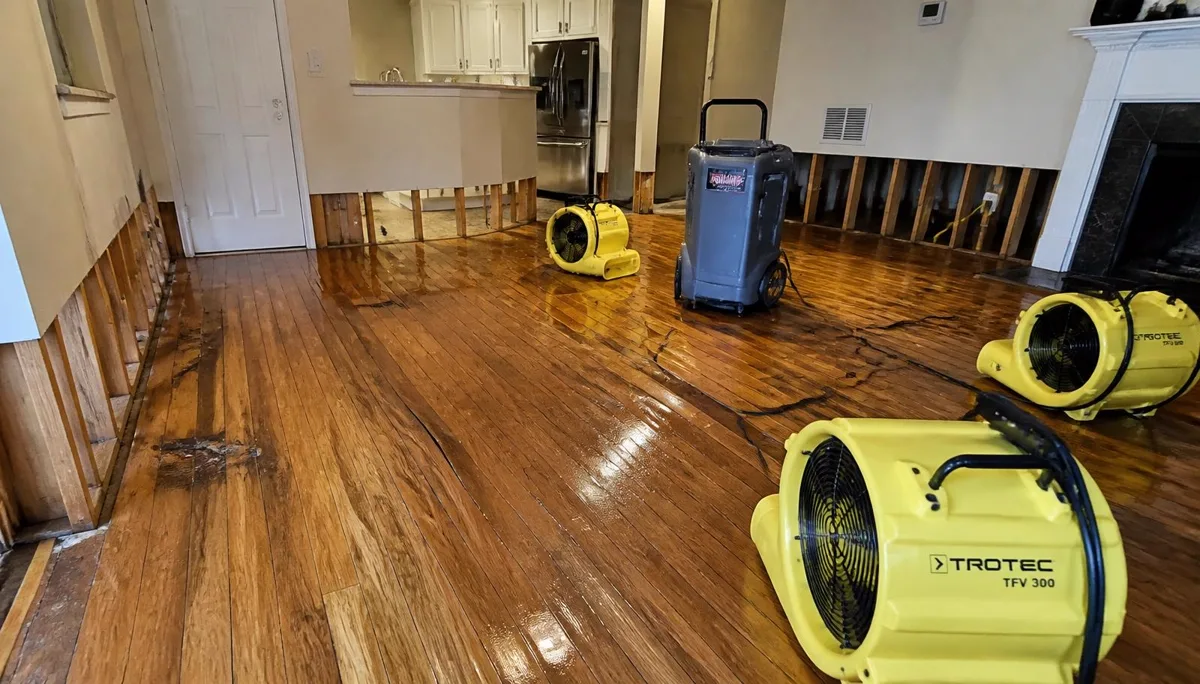
Huntington Harbour · Huntington Beach
Huntington Harbour is waterfront housing on man-made channels, built mostly before 1980, in the most corrosive air in the county.
Orange County Rapid Restoration covers Huntington Harbour out of the same south and central staging points that serve the rest of Huntington Beach. Below is what the housing here is actually made of, and what that means when a pipe lets go.
74%
Built before 1980
90%
Built before 1990
59%
Owner-occupied
$123,257
Median household income
Housing figures: US Census ACS tables B25003, B25034, B25024 and B19013 for ZCTA 92649.
Seventy-four percent of the Harbour predates 1980. Homes sit directly on channels, which puts brass fittings, valve stems, water-heater connections and air-handler coils in constant salt-laden air. We regularly find the copper in the wall sound and the fitting at the end of it corroded through.
The same air makes drying harder. Ambient humidity here is frequently at or above the target, so ventilation removes nothing and every job runs closed on refrigerant dehumidification.
Homes on the channels often include lower-level rooms, boat garages and dock-level storage that sit close to the water. Water released above them collects there, and anything that reaches soil or standing channel-adjacent groundwater is handled as contaminated regardless of where it started.
That changes the job from drying to removal. Porous materials — carpet, pad, insulation, the lower section of drywall — come out rather than being dried in place.
Pick the closest match. Every situation below is handled by our crews tonight.
Pressurized lines can release hundreds of gallons an hour into walls and flooring.
Warm spots, high water bills and buckling floors usually mean a leak under the slab.
Tank ruptures flood garages and adjacent rooms, often soaking shared drywall.
Condensate lines clog and drip into ceilings for weeks before the stain appears.
Dishwashers, washing machines and supply valves fail without warning.
Category 3 water requires containment, removal of porous materials and sanitizing.
Insulation holds moisture long after the rain stops and hides active growth.
Visible growth after a water event needs containment before any repair work.
24/7 dispatch, shutoff guidance and crew assignment.
Meters and thermal imaging map every wet material.
Truck-mount and portable extraction of standing water.
Air movers, dehumidifiers and daily documented readings.
Dry standard confirmed, then rebuild and finish work.
Tell us what happened and where. A restoration manager calls you back immediately, day or night, and a crew can be on site within the hour anywhere in Orange County.
Or call now — someone answers 24/7: (949) 555-0142
It makes the fittings fail faster rather than the pipe. Brass angle stops, valve stems, water-heater connections and HVAC coils corrode in salt air. In a neighbourhood that is seventy-four percent pre-1980, many of those parts are original.
No. Channel-adjacent air is frequently wetter than the air you are trying to dry, so ventilating adds moisture. These jobs run closed with dehumidification, which is slower to start and is the only approach that actually reaches dry standard here.
Yes. Water that contacts soil or near-groundwater in a below-grade space is treated as contaminated no matter what it was when it left the pipe. That means containment and removal of porous materials rather than drying them in place.
Rust-coloured water, corrosion or moisture at the base, popping during heating, and age past ten to twelve years. In salt air the corrosion arrives sooner. A tank that lets go releases its full capacity plus whatever the supply line keeps delivering.
Usually not by a standard homeowners policy — surface and ground water are typically flood exclusions. Water from a failed pipe is a different matter and is generally covered. Establishing which it is on day one, with photographs, is what settles the claim.
Within the hour at any time. The Harbour is at the north-west edge of our coverage and we account for the drive in dispatch rather than quoting a time that only holds in light traffic.