Burst pipe or supply line
Pressurized lines can release hundreds of gallons an hour into walls and flooring.
24/7 Emergency Response — Crews Dispatched in 60 Minutes
(949) 555-0142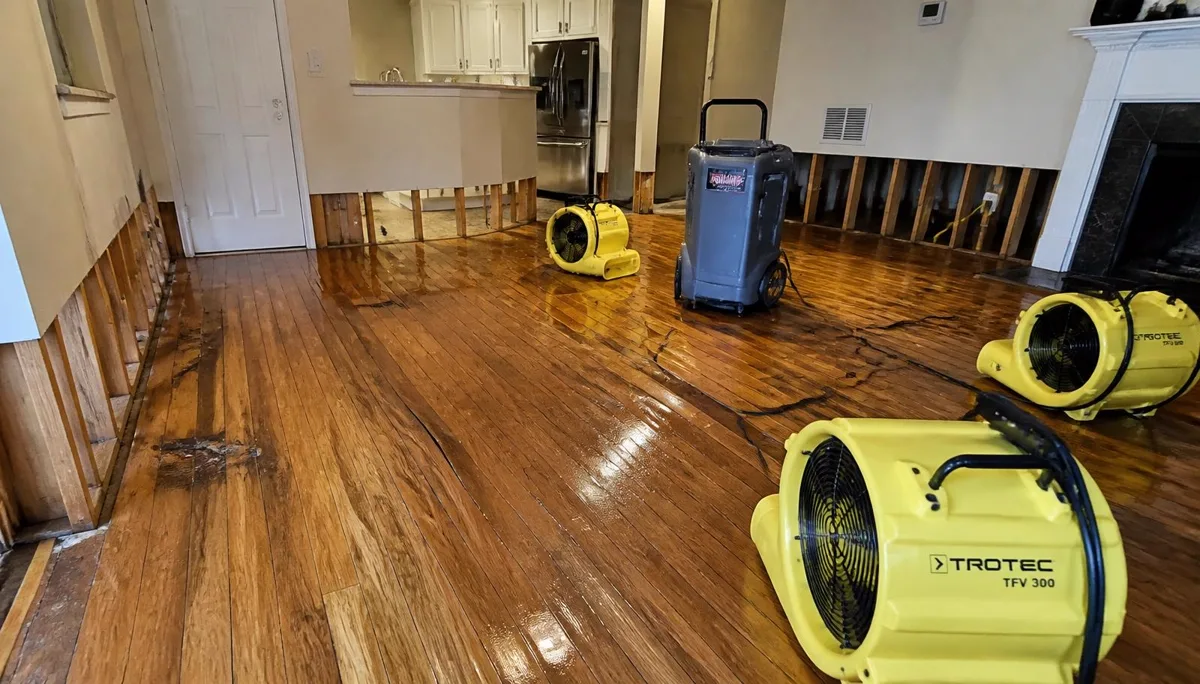
Cowan Heights · North Tustin
Cowan Heights is unincorporated hillside North Tustin, three quarters of it built before 1980, on large lots with private drives.
Orange County Rapid Restoration covers Cowan Heights out of the same south and central staging points that serve the rest of North Tustin. Below is what the housing here is actually made of, and what that means when a pipe lets go.
74%
Built before 1980
84%
Built before 1990
61%
Owner-occupied
$129,331
Median household income
Housing figures: US Census ACS tables B25003, B25034, B25024 and B19013 for ZCTA 92705.
Three quarters of this area was built before 1980, so original copper is at slab-leak age and the older portion carries cast-iron drains and surviving galvanized branch lines. Combine that with hillside grading and a failure does not stay where it started — it runs downslope through the structure and surfaces at the low point.
The result is a wet area that is frequently a room or a level away from the source, with nothing visibly wet in between. Thermal imaging and metering map it; walking the house does not.
Hillside lots here carry heavy mature planting and the irrigation to support it, often running directly against foundations and retaining walls. Saturated soil at a slab edge produces damp baseboards along one exterior wall that reads exactly like a plumbing leak until it is metered properly.
Retaining wall weep holes and area drains matter here more than in flat neighbourhoods. When one blocks during a storm, the water finds the next lowest path, and that is frequently a garage threshold or a slab edge.
Pick the closest match. Every situation below is handled by our crews tonight.
Pressurized lines can release hundreds of gallons an hour into walls and flooring.
Warm spots, high water bills and buckling floors usually mean a leak under the slab.
Tank ruptures flood garages and adjacent rooms, often soaking shared drywall.
Condensate lines clog and drip into ceilings for weeks before the stain appears.
Dishwashers, washing machines and supply valves fail without warning.
Category 3 water requires containment, removal of porous materials and sanitizing.
Insulation holds moisture long after the rain stops and hides active growth.
Visible growth after a water event needs containment before any repair work.
24/7 dispatch, shutoff guidance and crew assignment.
Meters and thermal imaging map every wet material.
Truck-mount and portable extraction of standing water.
Air movers, dehumidifiers and daily documented readings.
Dry standard confirmed, then rebuild and finish work.
Tell us what happened and where. A restoration manager calls you back immediately, day or night, and a crew can be on site within the hour anywhere in Orange County.
Or call now — someone answers 24/7: (949) 555-0142
Because the house is on a graded hillside and the structure is not level with itself. Water follows the fall through framing and slab and surfaces at the low point. Opening the ceiling under the stain is frequently opening the wrong ceiling, which is why we scan first.
It is in the window. Original copper at forty-five to fifty years produces pinholes under slabs, and the older portion may still carry galvanized branch lines from partial repipes. The meter test costs two minutes and tells you whether anything is running right now.
Usually drainage. A blocked weep hole or a silted area drain puts water against the foundation, and it wicks in at the slab edge. It reads cool and linear where a hot-side leak reads warm and centred, and readings fall once the source outside is dealt with.
Only if we do not know about them. Tell us on the call if access is narrow or gated and we will send the right vehicle rather than discovering the constraint at the bottom of the drive.
Retaining wall weep holes open, area drains and swales clear of leaf litter, downspouts discharging away from the slab, and no soil mounded above the weep screed. Those four cover most storm intrusions we see up here.
Not for the work. It can change which agency handles permits and which water provider bills you, both of which we confirm rather than assume. Anything past your meter is the property owner's regardless of jurisdiction.