Burst pipe or supply line
Pressurized lines can release hundreds of gallons an hour into walls and flooring.
24/7 Emergency Response — Crews Dispatched in 60 Minutes
(949) 555-0142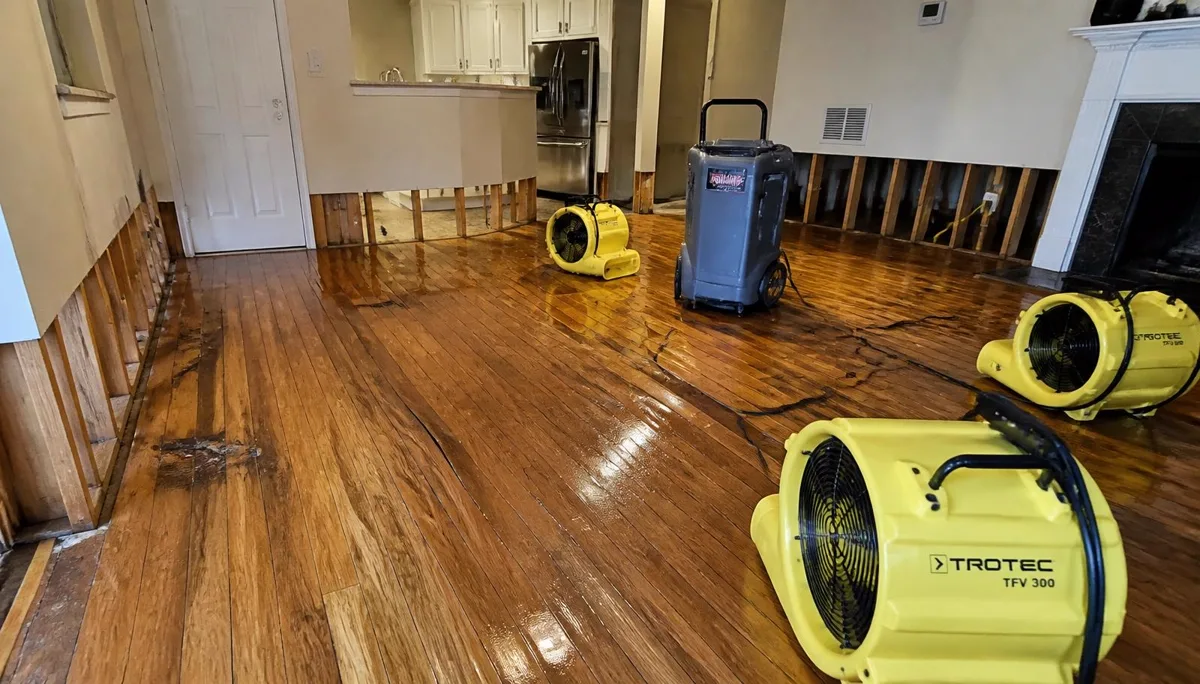
Coto de Caza · south Orange County
Coto de Caza is ninety percent owner-occupied on large private lots behind gates, which changes both what fails and how long it takes anyone to notice.
Orange County Rapid Restoration covers Coto de Caza out of the same south and central staging points that serve the rest of south Orange County. Below is what the housing here is actually made of, and what that means when a pipe lets go.
90%
Owner-occupied
94%
Single-family homes
$211,250
Median household income
33%
Built before 1990
Housing figures: US Census ACS tables B25003, B25034, B25024 and B19013 for ZCTA 92679.
Coto has the highest ownership and the highest share of detached housing in this set. Large floor plans on large lots mean long horizontal supply runs, and a failure at one end of a run can put water under flooring across several rooms before anything surfaces.
It also means nobody else notices. There is no neighbour below, no shared wall and no manager walking the property. Detection depends entirely on the household, and in a house with wings that go unused for days that can take a while.
Large lots come with extensive irrigation, and in an equestrian community they come with wash racks, barn plumbing and hose bibs a long way from the house. A failed valve or a broken lateral saturates soil, and water wicks in under the weep screed or at a slab edge.
It presents as damp baseboards along one exterior wall with no plumbing fault to find. Shutting irrigation off for forty-eight hours and re-metering is what separates it from a slab leak.
Pick the closest match. Every situation below is handled by our crews tonight.
Pressurized lines can release hundreds of gallons an hour into walls and flooring.
Warm spots, high water bills and buckling floors usually mean a leak under the slab.
Tank ruptures flood garages and adjacent rooms, often soaking shared drywall.
Condensate lines clog and drip into ceilings for weeks before the stain appears.
Dishwashers, washing machines and supply valves fail without warning.
Category 3 water requires containment, removal of porous materials and sanitizing.
Insulation holds moisture long after the rain stops and hides active growth.
Visible growth after a water event needs containment before any repair work.
24/7 dispatch, shutoff guidance and crew assignment.
Meters and thermal imaging map every wet material.
Truck-mount and portable extraction of standing water.
Air movers, dehumidifiers and daily documented readings.
Dry standard confirmed, then rebuild and finish work.
Tell us what happened and where. A restoration manager calls you back immediately, day or night, and a crew can be on site within the hour anywhere in Orange County.
Or call now — someone answers 24/7: (949) 555-0142
As soon as anything is wet, or as soon as the meter turns with the house closed. In a large house on acreage the wet area is normally bigger than what you can see, and the gap between the failure and the discovery is already working against you.
Most often irrigation or drainage against the foundation. It reads cool and runs in a line along the wall, where a hot-side slab leak reads warm with a centre. We shut the irrigation off, wait forty-eight hours and re-meter before opening anything.
Yes, with the resident's authorisation to the gate. Tell us the gate you use when you call and we will have the crew announced rather than turned around at the entrance, which is the usual delay on a first visit here.
The pre-1990 portion is entering the band where original copper starts producing pinholes under slabs. If your home is from that phase and has never been repiped or rerouted, it is in the window. The two-minute meter test tells you whether anything is running right now.
Water from a failed pipe is generally a sudden and accidental loss whether the pipe was in the house or an outbuilding, but outbuilding coverage varies by policy. Photograph the source and the path on day one — it is what the question turns on.
Five to eight days when water has tracked through a hallway into adjoining rooms, which is the common pattern in these plans. Equipment count follows the wet perimeter rather than the square footage, so a long spread needs more machines than its area suggests.
Yes. Large-plan losses are routine here and the constraint is power rather than machines — a full drying setup on a big spread can need dedicated circuits, which we sort out on arrival rather than discovering on day two.