Burst pipe or supply line
Pressurized lines can release hundreds of gallons an hour into walls and flooring.
24/7 Emergency Response — Crews Dispatched in 60 Minutes
(949) 555-0142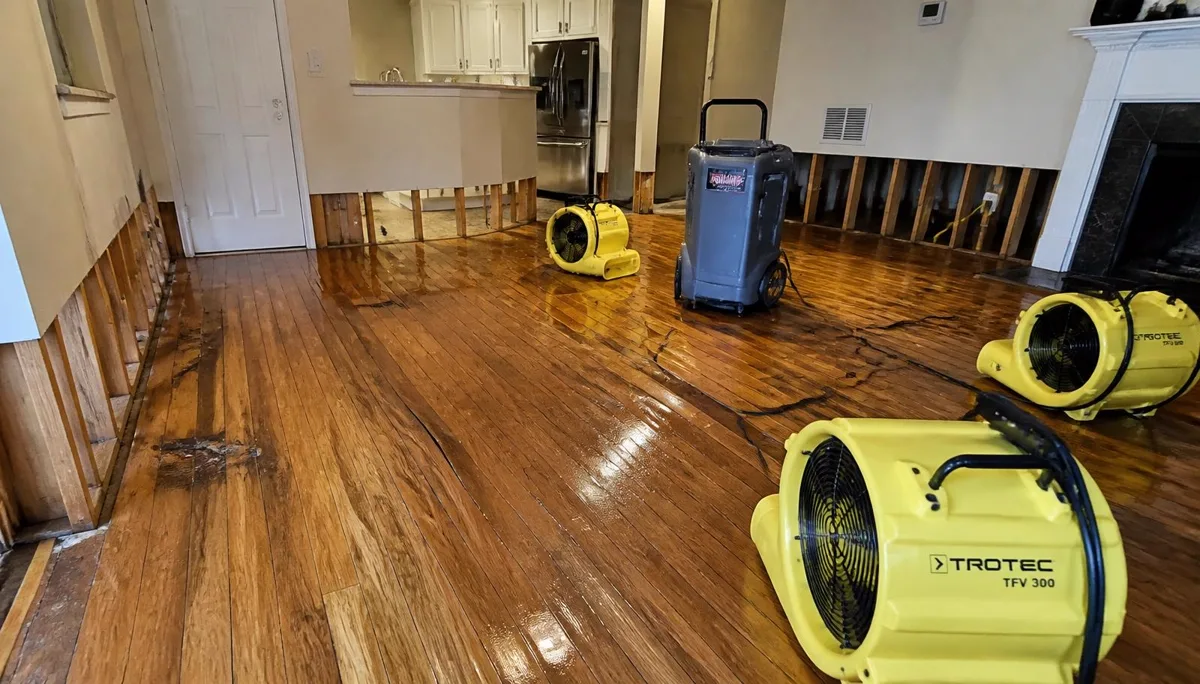
Balboa Peninsula · Newport Beach
The Peninsula is old beach housing at sea level with more renters than owners — three conditions that each make a water loss worse.
Orange County Rapid Restoration covers Balboa Peninsula out of the same south and central staging points that serve the rest of Newport Beach. Below is what the housing here is actually made of, and what that means when a pipe lets go.
74%
Built before 1980
44%
Owner-occupied
$191,213
Median household income
5,373
Households
Housing figures: US Census ACS tables B25003, B25034, B25024 and B19013 for ZCTA 92661.
Peninsula and island construction sits close to the water table. That changes drying in a way that no equipment count fixes: the ground beneath the structure keeps releasing moisture for the duration, so the job runs longer and needs more dehumidification than the same loss two miles inland.
It also raises category. Water that reaches soil in a below-grade or near-grade space stops being clean water regardless of where it started, which means removal of porous materials rather than drying them.
Owner-occupancy on the Peninsula is forty-four percent, the lowest figure in this set, and a large share of the rental stock is seasonal. A supply line that fails in a unit between tenancies runs until somebody happens to check.
The arithmetic is unforgiving. A failed half-inch line moves two to four hundred gallons an hour. A week unattended in a small beach cottage is not a drying job; it is a rebuild, and frequently a mold remediation attached to it.
Pick the closest match. Every situation below is handled by our crews tonight.
Pressurized lines can release hundreds of gallons an hour into walls and flooring.
Warm spots, high water bills and buckling floors usually mean a leak under the slab.
Tank ruptures flood garages and adjacent rooms, often soaking shared drywall.
Condensate lines clog and drip into ceilings for weeks before the stain appears.
Dishwashers, washing machines and supply valves fail without warning.
Category 3 water requires containment, removal of porous materials and sanitizing.
Insulation holds moisture long after the rain stops and hides active growth.
Visible growth after a water event needs containment before any repair work.
24/7 dispatch, shutoff guidance and crew assignment.
Meters and thermal imaging map every wet material.
Truck-mount and portable extraction of standing water.
Air movers, dehumidifiers and daily documented readings.
Dry standard confirmed, then rebuild and finish work.
Tell us what happened and where. A restoration manager calls you back immediately, day or night, and a crew can be on site within the hour anywhere in Orange County.
Or call now — someone answers 24/7: (949) 555-0142
Immediately on the Peninsula, and sooner than you would inland. Ambient humidity here means nothing dries on its own while you decide, and in a seasonal rental the clock has usually been running before anyone found the water at all.
Yes. Structures here sit close to sea level, so the ground under the slab stays a moisture source throughout the job. Drying takes longer and needs more dehumidification than the same loss inland, and that has to be in the scope from day one rather than discovered on day four.
It depends entirely on how long it ran. Photograph everything before anything moves. Expect the category to have escalated — clean water becomes contaminated at around forty-eight hours — which means porous materials come out rather than being dried.
It can meet groundwater before it meets the pipe. Where that is likely, rerouting the line overhead is often chosen instead of trenching, because it avoids the excavation entirely and retires the whole run rather than one failure point.
Original copper at slab-leak age in the newer end, and in the older cottages galvanized branch lines that survived partial repipes, cast-iron drains, and additions built across decades with several plumbing eras inside one wall.
Call us if water is moving, and notify the owner or manager in writing the same day so there is a timestamp. Emergency mitigation does not need an owner's signature. Your renters policy covers your belongings and that claim rests on photographs taken before anything is moved.
Twenty-four to forty-eight hours, and coastal humidity means nothing dries passively in between. In an unoccupied unit that window passes before anyone knows there is water, which is why seasonal rentals produce the worst losses we see here.