Burst pipe or supply line
Pressurized lines can release hundreds of gallons an hour into walls and flooring.
24/7 Emergency Response — Crews Dispatched in 60 Minutes
(949) 555-0142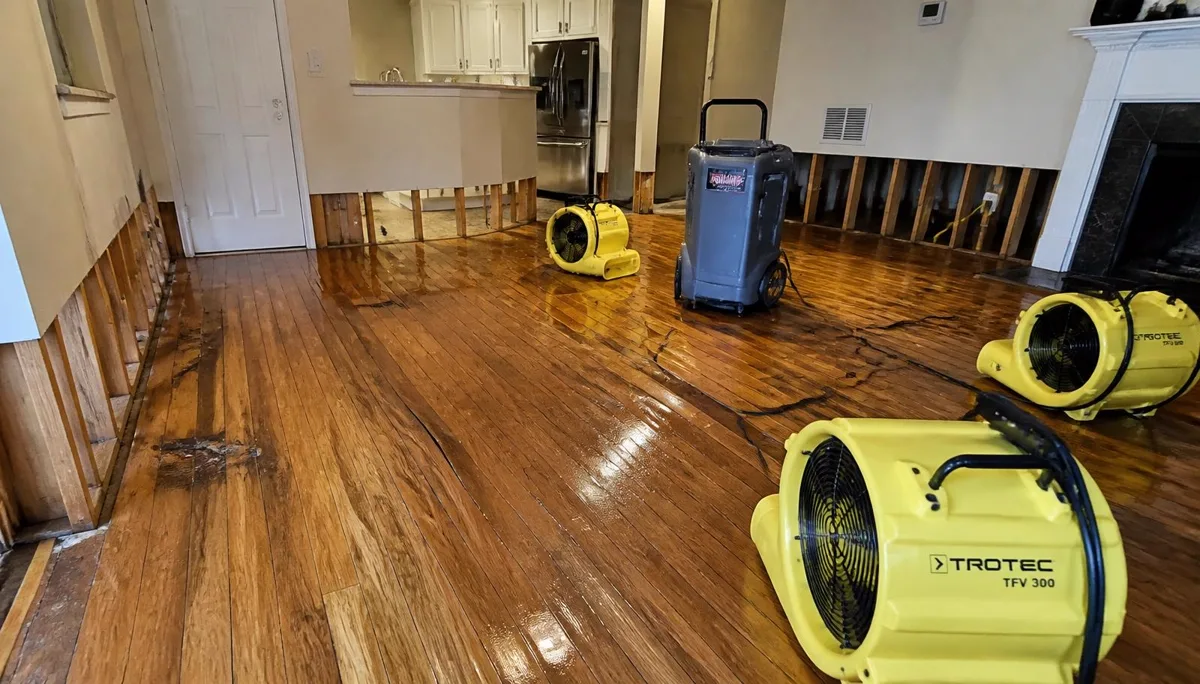
Serving Mission Viejo, California
Mission Viejo is a 1970s master-planned city on slab-on-grade foundations, now at the age where original copper starts to fail.
Orange County Rapid Restoration dispatches to Mission Viejo around the clock. What follows is what the losses look like here specifically, and what the response involves.
52%
Built before 1980
83%
Single-family homes
76%
Owner-occupied
$135,902
Median household income
Housing figures: US Census ACS tables B25003, B25034, B25024 and B19013, aggregated across Mission Viejo’s ZCTAs. Water service: Moulton Niguel Water District, with El Toro and Santa Margarita Water Districts serving parts of the city.
Almost nothing in Mission Viejo predates 1960 — one percent — but fifty-two percent went up before 1980. The city was developed largely as a single master-planned build-out, which means a very large number of homes share a construction era, a foundation type and a plumbing specification, and therefore reach the end of that specification's service life at roughly the same time.
That is why slab leaks here cluster. When neighbours on the same street start reporting warm floors and rising bills within a year or two of each other, it is not coincidence; it is a cohort of copper installed in the same decade under the same conditions.
With eighty-three percent of the stock single-family and seventy-six percent owner-occupied, the typical loss here is one household's entire home rather than one unit in a stack. Water tracks from a hallway into bedrooms under continuous flooring, and the drying scope is the floor plan rather than a room.
The equipment count follows the wet perimeter, not the square footage. The S500 baseline is one air mover per ten to sixteen linear feet of wet wall plus one for each wet inside corner, which is why a long narrow spread through a hallway needs more machines than a square room of the same area.
Pick the closest match. Every situation below is handled by our crews tonight.
Pressurized lines can release hundreds of gallons an hour into walls and flooring.
Warm spots, high water bills and buckling floors usually mean a leak under the slab.
Tank ruptures flood garages and adjacent rooms, often soaking shared drywall.
Condensate lines clog and drip into ceilings for weeks before the stain appears.
Dishwashers, washing machines and supply valves fail without warning.
Category 3 water requires containment, removal of porous materials and sanitizing.
Insulation holds moisture long after the rain stops and hides active growth.
Visible growth after a water event needs containment before any repair work.
Claims are won or lost on documentation. From the first hour we photograph the source, log the affected materials and record the water category, so your adjuster sees a sudden, accidental loss rather than a maintenance issue.
We take moisture readings in every wet material — subfloor, framing, insulation and drywall cavities — and repeat them daily until each one reaches documented dry standard. Those logs go straight into the claim file.
We bill your carrier directly using industry-standard estimating software, so you pay your deductible and nothing more on covered work. If hidden damage appears during demolition, we file the supplement for you.
24/7 dispatch, shutoff guidance and crew assignment.
Meters and thermal imaging map every wet material.
Truck-mount and portable extraction of standing water.
Air movers, dehumidifiers and daily documented readings.
Dry standard confirmed, then rebuild and finish work.
Tell us what happened and where. A restoration manager calls you back immediately, day or night, and a crew can be on site within the hour anywhere in Orange County.
Or call now — someone answers 24/7: (949) 555-0142
Because the city was built in one concentrated push — fifty-two percent before 1980 — largely on slab-on-grade with copper routed under or through the concrete. Homes built the same year to the same specification reach the end of that specification's life in the same window, which is why they cluster on a street.
Not always. A trench through the concrete reaches an isolated failure directly. Where the line has failed once and the rest is the same age, rerouting overhead retires the whole run instead of the single point that has failed so far.
Worth checking, not worth panicking. Homes built in the same phase share plumbing age and specification. Shut every fixture and watch the meter; if the low-flow indicator turns, something is running. It takes two minutes and it is the only test that costs nothing.
The S500 baseline is one per ten to sixteen linear feet of wet wall, plus one for each wet inside corner. A long spread down a hallway therefore needs more machines than a square room of the same floor area, because the wet perimeter is what sets the count.
Moulton Niguel Water District serves much of the city, with El Toro Water District and Santa Margarita Water District serving parts of it. Your bill names the agency. Anything past the meter is the property owner's regardless of which one it is.
Because the loss is contained to one household, which is better for the claim and worse for detection. There is no neighbour below to notice a stain, so a leak under a bedroom floor can run until the flooring lifts or the smell reaches a hallway.
Shut the water off at the main and call. Do not wait to confirm it — a hot-water slab leak is losing water and heat continuously, and every hour it runs it moves further under the flooring. Confirming the location is our job and takes minutes with the right instruments.
Five to eight days when water has tracked from a hallway into adjoining rooms, which is the common pattern in these floor plans. A single contained room is three to five. Readings decide it, not the calendar.