Burst pipe or supply line
Pressurized lines can release hundreds of gallons an hour into walls and flooring.
24/7 Emergency Response — Crews Dispatched in 60 Minutes
(949) 555-0142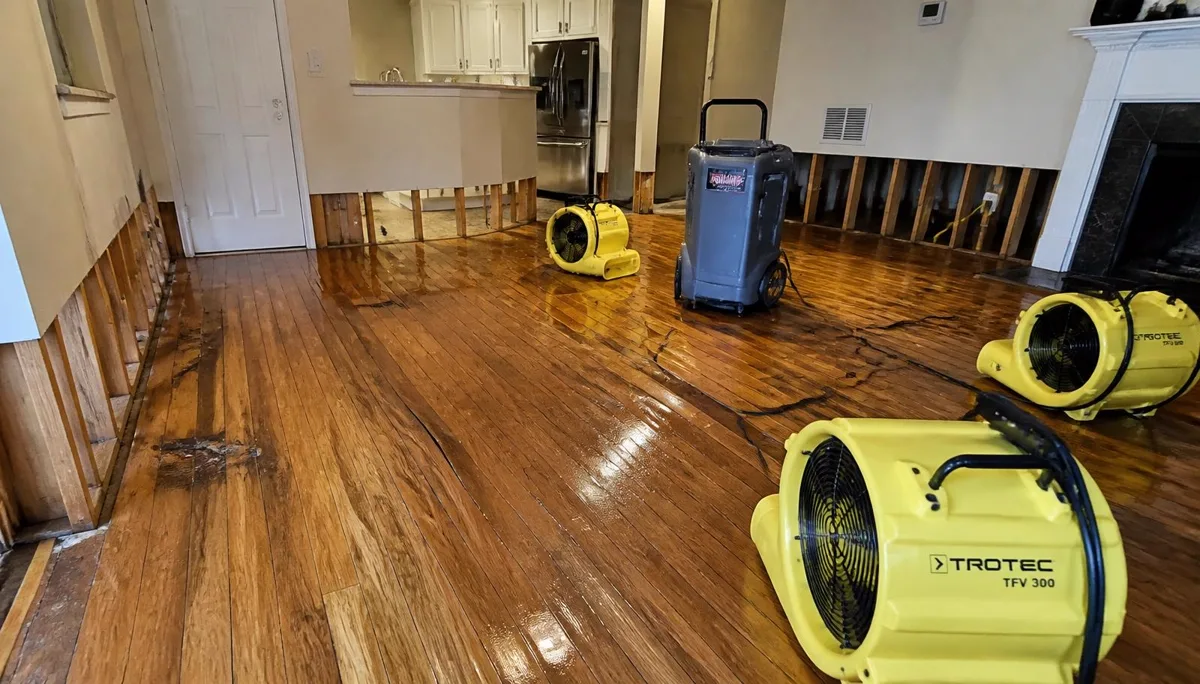
Serving Lake Forest, California
Lake Forest spans the original 1970s tracts and the newer developments to the east, with seventy percent of households owning.
Orange County Rapid Restoration dispatches to Lake Forest around the clock. What follows is what the losses look like here specifically, and what the response involves.
70%
Owner-occupied
72%
Single-family homes
40%
Built before 1980
68%
Built before 1990
Housing figures: US Census ACS tables B25003, B25034, B25024 and B19013, aggregated across Lake Forest’s ZCTAs. Water service: El Toro Water District and Irvine Ranch Water District, depending on the neighbourhood.
The gap between those two numbers is the story of Lake Forest: a substantial 1970s core with an equally substantial 1980s expansion around it. Both are now old enough to fail, but they fail differently. The 1970s tracts are producing slab leaks in original copper. The 1980s stock is producing appliance and fixture failures — angle stops, supply lines, water heaters at the end of a second service life.
Seventy-two percent of the housing is single-family, so a loss is generally contained to one household. That is better for the claim and worse for detection, because there is no neighbour below to notice a stain.
El Toro Water District serves part of Lake Forest along with Laguna Woods and portions of Mission Viejo, Laguna Hills and Aliso Viejo. Irvine Ranch Water District serves other parts. Which one you are in is on the bill rather than deducible from the address.
It changes nothing about a house-side loss, which is nearly all of them. It matters when the meter itself is involved, or when a main-side leak is surfacing in a parkway and being mistaken for a foundation problem.
Pick the closest match. Every situation below is handled by our crews tonight.
Pressurized lines can release hundreds of gallons an hour into walls and flooring.
Warm spots, high water bills and buckling floors usually mean a leak under the slab.
Tank ruptures flood garages and adjacent rooms, often soaking shared drywall.
Condensate lines clog and drip into ceilings for weeks before the stain appears.
Dishwashers, washing machines and supply valves fail without warning.
Category 3 water requires containment, removal of porous materials and sanitizing.
Insulation holds moisture long after the rain stops and hides active growth.
Visible growth after a water event needs containment before any repair work.
Claims are won or lost on documentation. From the first hour we photograph the source, log the affected materials and record the water category, so your adjuster sees a sudden, accidental loss rather than a maintenance issue.
We take moisture readings in every wet material — subfloor, framing, insulation and drywall cavities — and repeat them daily until each one reaches documented dry standard. Those logs go straight into the claim file.
We bill your carrier directly using industry-standard estimating software, so you pay your deductible and nothing more on covered work. If hidden damage appears during demolition, we file the supplement for you.
24/7 dispatch, shutoff guidance and crew assignment.
Meters and thermal imaging map every wet material.
Truck-mount and portable extraction of standing water.
Air movers, dehumidifiers and daily documented readings.
Dry standard confirmed, then rebuild and finish work.
Tell us what happened and where. A restoration manager calls you back immediately, day or night, and a crew can be on site within the hour anywhere in Orange County.
Or call now — someone answers 24/7: (949) 555-0142
Both El Toro Water District and Irvine Ranch Water District serve parts of the city, and the boundary does not follow the city limits. Your water bill names the agency. For anything past the meter it makes no practical difference — that is the property owner's side.
Three to five days for one room involving drywall and hardwood. Dense materials such as plaster or concrete run longer. We take daily readings and only pull equipment when materials reach documented dry standard, not when the surface feels dry to the hand.
It means the city is a 1970s core with a large 1980s expansion around it, and the two fail differently. The older tracts are producing slab leaks in original copper. The 1980s stock is producing appliance and fixture failures — angle stops, supply lines, water heaters at the end of a second life.
It is a documented moisture content, compared against unaffected material of the same type in the same building. Framing at or below roughly sixteen percent, gypsum near one percent. The meter decides, not the schedule, and the readings go into the file the adjuster sees.
A loss stays inside one household, which simplifies the claim and complicates detection. Nobody below notices a stain, so a leak under a floor can run until the flooring lifts, the baseboards swell or the smell reaches a room people use.
A tank rupture floods the garage and pushes water through the shared wall into adjacent rooms, usually along the bottom plate where it is not visible. Garage slabs are often slightly lower, which delays discovery until the drywall on the house side has already wicked.
We inspect with meters and thermal imaging, and where growth is suspected we coordinate independent air and surface sampling. Post-remediation clearance is always performed by a third party. The lab that verifies the work should never be the company that did it.
A walk of the affected area with moisture meters, thermal imaging where the source is not obvious, and a written scope: where the water went, what is salvageable, what it takes to dry. No charge, and no obligation to use us afterwards.