Burst pipe or supply line
Pressurized lines can release hundreds of gallons an hour into walls and flooring.
24/7 Emergency Response — Crews Dispatched in 60 Minutes
(949) 555-0142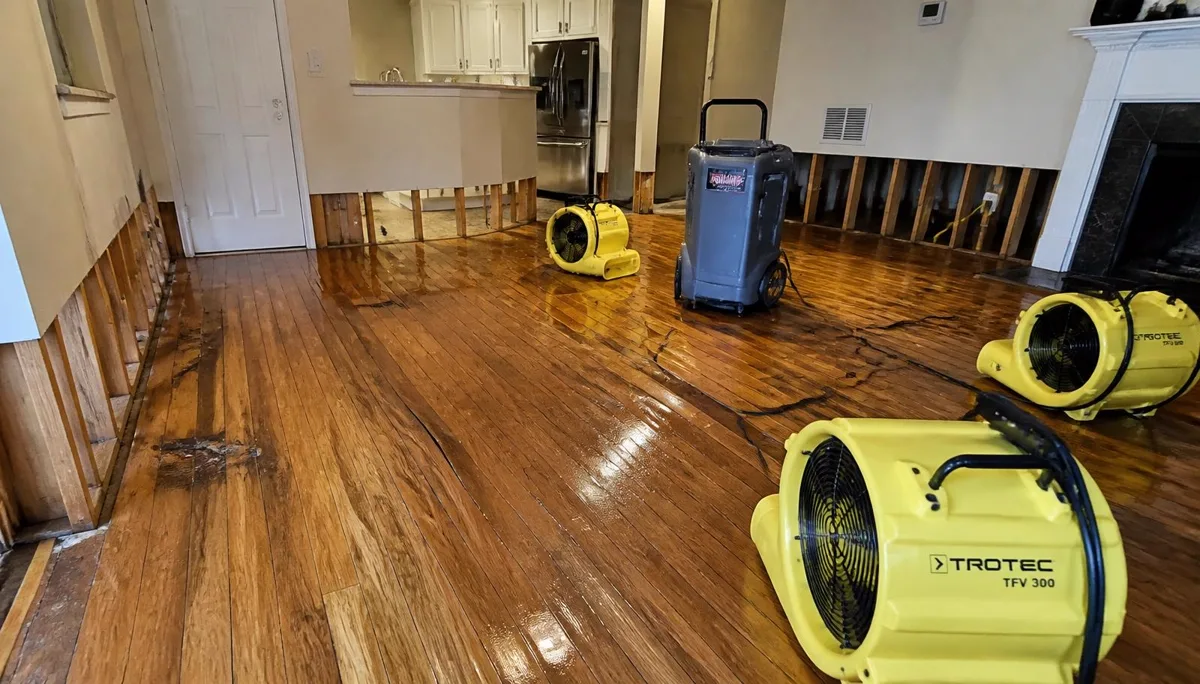
Serving Laguna Niguel, California
Laguna Niguel is largely an 1980s city — only a quarter of it predates 1980, but two-thirds predates 1990.
Orange County Rapid Restoration dispatches to Laguna Niguel around the clock. What follows is what the losses look like here specifically, and what the response involves.
24%
Built before 1980
68%
Built before 1990
67%
Owner-occupied
$140,452
Median household income
Housing figures: US Census ACS tables B25003, B25034, B25024 and B19013, aggregated across Laguna Niguel’s ZCTAs. Water service: Moulton Niguel Water District.
Twenty-four percent of Laguna Niguel predates 1980 but sixty-eight percent predates 1990, which places the bulk of the housing in a single decade. Those homes are now around forty years old — past the service life of water heaters, angle stops, supply connectors and washing-machine hoses, and into the window where original copper begins producing pinholes under slabs.
Forty years is also long enough for two or three rounds of appliance replacement, and each replacement is a new connection made by whoever installed it. A braided hose fitted hand-tight in 2009 is a live risk today.
Much of the city is built on graded terraces, and water released inside a house on a terraced lot does not stay level. It follows the slab and the framing downhill, which routinely means it appears two rooms away from the failure with nothing wet in between.
That is why the first step is thermal imaging and metering rather than demolition. Opening the wall where the stain is often means opening the wrong wall.
Pick the closest match. Every situation below is handled by our crews tonight.
Pressurized lines can release hundreds of gallons an hour into walls and flooring.
Warm spots, high water bills and buckling floors usually mean a leak under the slab.
Tank ruptures flood garages and adjacent rooms, often soaking shared drywall.
Condensate lines clog and drip into ceilings for weeks before the stain appears.
Dishwashers, washing machines and supply valves fail without warning.
Category 3 water requires containment, removal of porous materials and sanitizing.
Insulation holds moisture long after the rain stops and hides active growth.
Visible growth after a water event needs containment before any repair work.
Claims are won or lost on documentation. From the first hour we photograph the source, log the affected materials and record the water category, so your adjuster sees a sudden, accidental loss rather than a maintenance issue.
We take moisture readings in every wet material — subfloor, framing, insulation and drywall cavities — and repeat them daily until each one reaches documented dry standard. Those logs go straight into the claim file.
We bill your carrier directly using industry-standard estimating software, so you pay your deductible and nothing more on covered work. If hidden damage appears during demolition, we file the supplement for you.
24/7 dispatch, shutoff guidance and crew assignment.
Meters and thermal imaging map every wet material.
Truck-mount and portable extraction of standing water.
Air movers, dehumidifiers and daily documented readings.
Dry standard confirmed, then rebuild and finish work.
Tell us what happened and where. A restoration manager calls you back immediately, day or night, and a crew can be on site within the hour anywhere in Orange County.
Or call now — someone answers 24/7: (949) 555-0142
Structural rot needs sustained moisture over weeks to months, not days. What happens in days is the part that matters more: subfloor delamination, adhesive failure under flooring, and mold growth that starts at twenty-four to forty-eight hours. By the time wood is actually rotting the loss has been running long enough that rot is the smallest of the problems.
Water follows the path of least resistance, not the shortest one. On a graded lot or under continuous flooring it travels along the slab surface or a bottom plate and surfaces where the finish is weakest. Thermal imaging and meters map the actual path, which is why we scan before opening anything.
Water heaters, braided appliance hoses, toilet angle stops and supply lines, dishwasher valves and air-handler condensate lines. All are original or on a second replacement, all sit out of sight, and all fail quietly rather than dramatically.
For the structure, no. For the components, yes. Forty years is past the service life of every connection, valve and appliance in the house, and it is the beginning of the window where original copper under a slab starts producing pinholes.
Because the structure is not level with itself. Water released on an upper terrace level runs down through the framing and the slab and appears at the lowest point, which can be two rooms away or a level below with nothing wet in between.
Moulton Niguel Water District, which also serves Aliso Viejo, Mission Viejo, Laguna Hills, Dana Point and San Juan Capistrano in whole or in part. A street-side leak is theirs; everything past the meter belongs to the property.
Rust-coloured water, moisture or corrosion at the base, popping sounds during heating, and age past ten to twelve years. A tank that goes releases its full capacity plus whatever the supply line delivers until someone shuts it off, which is why placement matters as much as age.
Frequently, yes. Cavity drying uses small holes drilled at the base of the wall to move dry air behind the drywall, so the board is saved and only the baseboard comes off. It works when the water is clean and caught early — both of which depend on how fast the call comes.
We document it, photograph it and file a supplement with your carrier rather than handing you a change order. Hidden damage is expected on a proportion of jobs; the difference is whether it was recorded properly when it was found.