Burst pipe or supply line
Pressurized lines can release hundreds of gallons an hour into walls and flooring.
24/7 Emergency Response — Crews Dispatched in 60 Minutes
(949) 555-0142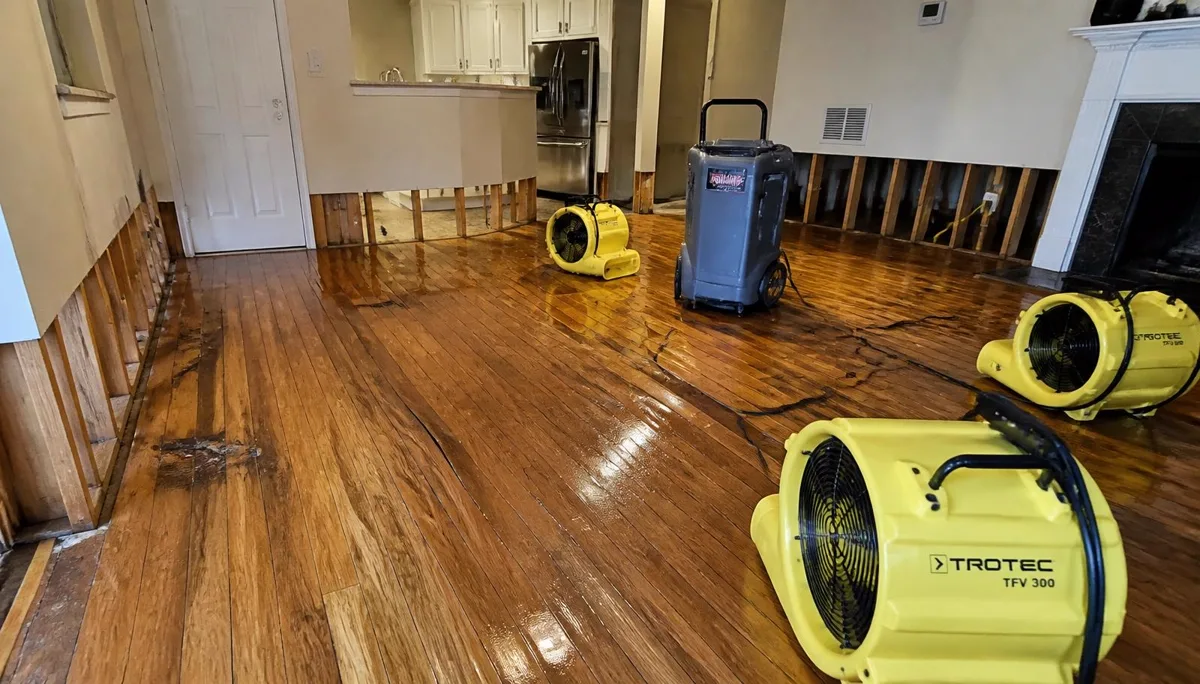
Serving Huntington Beach, California
Huntington Beach is a 1960s and 1970s tract city on the coast, which means original-age plumbing in a salt-air environment.
Orange County Rapid Restoration dispatches to Huntington Beach around the clock. What follows is what the losses look like here specifically, and what the response involves.
69%
Built before 1980
83%
Built before 1990
55%
Owner-occupied
$122,093
Median household income
Housing figures: US Census ACS tables B25003, B25034, B25024 and B19013, aggregated across Huntington Beach’s ZCTAs. Water service: City of Huntington Beach Public Works Utilities Division.
Only six percent of Huntington Beach predates 1960, but sixty-nine percent predates 1980. The city is overwhelmingly a product of the tract boom, which means a very large number of homes are running on their original copper supply lines at fifty years of age, on slab-on-grade foundations, with the lines routed under or through the concrete.
Copper does not fail on a schedule, but it fails predictably where it moves against concrete or where water chemistry has been working on it for decades. A slab leak announces itself as a warm patch on the floor, a water meter that turns with every tap closed, or a bill that climbs without explanation.
Proximity to the ocean accelerates corrosion on exposed fittings, valve stems, water-heater connections and the condensate pans and coils in air handlers. The pipe in the wall may be sound while the brass fitting at the angle stop behind a toilet fails first.
It also slows drying. Coastal humidity means the outside air is often no drier than the inside air, so opening windows does nothing and the job runs on refrigerant dehumidification and controlled airflow rather than ventilation.
Pick the closest match. Every situation below is handled by our crews tonight.
Pressurized lines can release hundreds of gallons an hour into walls and flooring.
Warm spots, high water bills and buckling floors usually mean a leak under the slab.
Tank ruptures flood garages and adjacent rooms, often soaking shared drywall.
Condensate lines clog and drip into ceilings for weeks before the stain appears.
Dishwashers, washing machines and supply valves fail without warning.
Category 3 water requires containment, removal of porous materials and sanitizing.
Insulation holds moisture long after the rain stops and hides active growth.
Visible growth after a water event needs containment before any repair work.
Claims are won or lost on documentation. From the first hour we photograph the source, log the affected materials and record the water category, so your adjuster sees a sudden, accidental loss rather than a maintenance issue.
We take moisture readings in every wet material — subfloor, framing, insulation and drywall cavities — and repeat them daily until each one reaches documented dry standard. Those logs go straight into the claim file.
We bill your carrier directly using industry-standard estimating software, so you pay your deductible and nothing more on covered work. If hidden damage appears during demolition, we file the supplement for you.
24/7 dispatch, shutoff guidance and crew assignment.
Meters and thermal imaging map every wet material.
Truck-mount and portable extraction of standing water.
Air movers, dehumidifiers and daily documented readings.
Dry standard confirmed, then rebuild and finish work.
Tell us what happened and where. A restoration manager calls you back immediately, day or night, and a crew can be on site within the hour anywhere in Orange County.
Or call now — someone answers 24/7: (949) 555-0142
Shut every fixture in the house and watch the water meter. If the low-flow indicator still turns, water is moving with nothing open. Warm spots on a tile or vinyl floor, the sound of running water in a quiet house, and a bill that steps up without a change in habits all point the same way.
Sixty-nine percent of Huntington Beach was built before 1980, almost all of it slab-on-grade with copper supply lines routed under or through the concrete. Those lines are now around fifty years old. Abrasion where the pipe passes through concrete and decades of water chemistry produce pinholes.
Yes. Coastal humidity means the outdoor air is often wetter than your drying target, so opening windows adds moisture rather than removing it. These jobs run as a closed system on refrigerant dehumidification, which starts slower but actually reaches dry standard.
It works on the exposed parts rather than the pipe in the wall — brass angle stops, valve stems, water-heater connections, and the coils and condensate pans in air handlers. We regularly find the pipe sound and the fitting at the end of it corroded through.
If one isolated section has failed, a trench through the concrete reaches it directly and costs less. If the rest of the run is the same age and the same material, rerouting overhead retires the whole line instead of the one point that has failed so far. In fifty-year-old copper that is often the better economics.
It depends where the water came from, which is a factual question answered by evidence rather than assumption. Photograph everything before anything is opened. If the source is a fixture inside your unit it usually falls to your policy; if it is common plumbing it is often the association's.
The City of Huntington Beach Public Works Utilities Division, as a member agency of the Municipal Water District of Orange County. A leak on the street side of the meter is theirs to fix; everything past it belongs to the property.
Often, if drying starts within about forty-eight hours. Floor drying mats pull moisture up through the boards rather than removing them. Engineered plank has a shorter window than solid wood because once the plywood core swells the veneer separates and cannot be restored.