Burst pipe or supply line
Pressurized lines can release hundreds of gallons an hour into walls and flooring.
24/7 Emergency Response — Crews Dispatched in 60 Minutes
(949) 555-0142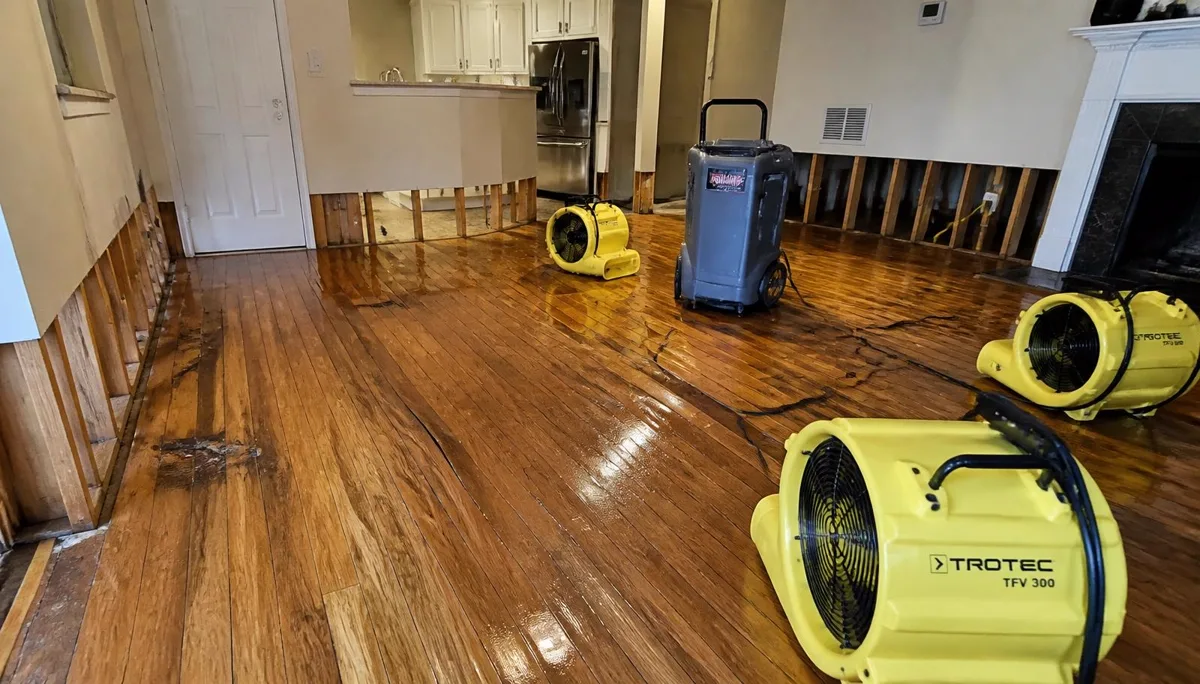
Serving Dana Point, California
Dana Point is a coastal city of bluff-top homes and condominium stock, where eighty-four percent of the housing predates 1990.
Orange County Rapid Restoration dispatches to Dana Point around the clock. What follows is what the losses look like here specifically, and what the response involves.
84%
Built before 1990
48%
Built before 1980
62%
Owner-occupied
$142,807
Median household income
Housing figures: US Census ACS tables B25003, B25034, B25024 and B19013, aggregated across Dana Point’s ZCTAs. Water service: Moulton Niguel Water District, with South Coast Water District serving parts of the city.
Dana Point's owner-occupancy is sixty-two percent and a substantial share of the stock is attached or stacked. In that construction a single supply failure is rarely one household's problem: water crosses a party wall or drops through a floor assembly, and one event becomes two or three claims with an association policy sitting between them.
Containment matters more here than in a detached house. Drying one unit while water continues to migrate into the next accomplishes nothing, so the first hour is spent establishing how far it has already gone rather than setting equipment.
Eighty-four percent of Dana Point was built before 1990, much of it close enough to the water for salt air to reach fittings, fasteners and HVAC coils. The same marine layer that corrodes them also keeps ambient humidity high, which means a wet material left alone here does not dry — it holds moisture and starts growing.
Refrigerant dehumidification is doing the work on these jobs. Opening windows in a coastal marine layer moves wet air into the building rather than dry air, and it slows the job down measurably.
Pick the closest match. Every situation below is handled by our crews tonight.
Pressurized lines can release hundreds of gallons an hour into walls and flooring.
Warm spots, high water bills and buckling floors usually mean a leak under the slab.
Tank ruptures flood garages and adjacent rooms, often soaking shared drywall.
Condensate lines clog and drip into ceilings for weeks before the stain appears.
Dishwashers, washing machines and supply valves fail without warning.
Category 3 water requires containment, removal of porous materials and sanitizing.
Insulation holds moisture long after the rain stops and hides active growth.
Visible growth after a water event needs containment before any repair work.
Claims are won or lost on documentation. From the first hour we photograph the source, log the affected materials and record the water category, so your adjuster sees a sudden, accidental loss rather than a maintenance issue.
We take moisture readings in every wet material — subfloor, framing, insulation and drywall cavities — and repeat them daily until each one reaches documented dry standard. Those logs go straight into the claim file.
We bill your carrier directly using industry-standard estimating software, so you pay your deductible and nothing more on covered work. If hidden damage appears during demolition, we file the supplement for you.
24/7 dispatch, shutoff guidance and crew assignment.
Meters and thermal imaging map every wet material.
Truck-mount and portable extraction of standing water.
Air movers, dehumidifiers and daily documented readings.
Dry standard confirmed, then rebuild and finish work.
Tell us what happened and where. A restoration manager calls you back immediately, day or night, and a crew can be on site within the hour anywhere in Orange County.
Or call now — someone answers 24/7: (949) 555-0142
Extraction and setup happen on the first visit. Drying then runs three to eight days depending on materials and how far the water travelled, with daily readings deciding when equipment comes out. Rebuild is scheduled separately once the structure is at dry standard — quoting one combined number up front usually means one of the two halves is a guess.
Photograph it before anything moves — the wall, the floor and any visible source. Notify the association in writing the same day. Then get drying started; waiting for the coverage question to resolve is what turns a two-day job into demolition, and the photographs protect your position either way.
Not on the coast. When the marine layer is in, the outside air often carries more moisture than the air you are trying to dry, so ventilating adds water to the building. These jobs run closed, on dehumidification and directed airflow.
Water heaters well past their service life, angle stops and supply connectors that have never been replaced, and in the older portion original copper under slabs. Salt air accelerates all of it by working on the brass and steel fittings rather than the pipe itself.
It doubles the perimeter you have to prove is dry. Water crosses a party wall through the bottom plate and the cavity, so drying your side while it continues migrating into the next unit accomplishes nothing. The first hour goes on establishing how far it has already gone.
Moulton Niguel Water District serves much of the city, with South Coast Water District serving parts of it. Your bill names the agency. Anything past the meter is the property owner's regardless of which.
Usually not the finishes and never your contents. Association policies typically cover the structure and common elements, with your own policy covering what is inside the walls of your unit. Where the line falls is in the governing documents, which is why the documentation of the source matters so much here.
Properties near the bluff rely on drains and swales moving storm water away from the structure. When one blocks, water pools against the foundation and enters below the finished floor. It presents as damp along an exterior wall after rain, with no plumbing fault to find.
Twenty-four to forty-eight hours given moisture and an organic surface, and the coastal humidity means materials do not dry passively in between. That is the argument for calling on the day rather than after the weekend.